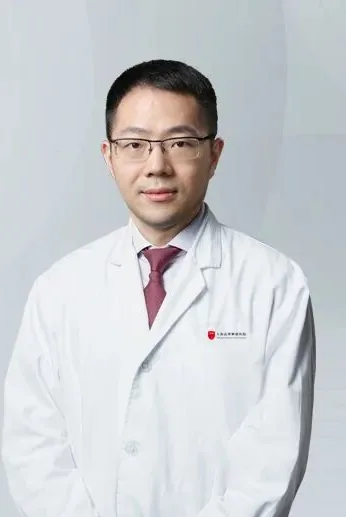
The 2026 Pujiang Prostate Cancer Academic Conference has been held in Shanghai under the theme of standardised guidance, precision breakthroughs, Chinese innovation and global collaboration, with the aim of advancing standardised diagnosis and treatment of prostate cancer in China and driving key technical innovation. After the meeting, Prof. Wang Hongkai, an invited expert in urologic oncology surgery at Shanghai GOBROAD Cancer Hospital, which is affiliated with China Pharmaceutical University, and associate chief physician of urology at Fudan University Shanghai Cancer Center, was invited to discuss the progress of robotic radical prostatectomy, the balance between tumour control and functional preservation, and the rise of Chinese surgical robots.
Robotic radical prostatectomy has moved steadily towards greater precision and better functional outcomes in recent years, and the questions below follow that trajectory: which surgical concepts matter most today, how the boundary between cure and preservation is drawn in individual patients, and whether the surgical platform itself is still a limiting factor.
Two Directions Where Functional Preservation Is Advancing
Innovation in the treatment philosophy of prostate cancer and the optimisation of functional preservation are important drivers of progress in clinical practice. In my view, breakthroughs in functional preservation are concentrated in two main directions.
The first is the refinement of surgical technique and a deeper understanding of anatomy. As our knowledge of the anatomical structures surrounding the prostate has deepened, we have come to recognise that conventional radical prostatectomy has tended to resect more tissue than necessary. Today, with the iterative upgrading of surgical technique, and in particular with robotic surgical systems, we are able to operate with far greater precision, removing the lesion completely while preserving key structures to the greatest possible extent. This includes precise protection of the nerves that govern erectile function and the important vessels that supply the perineum and the penis, laying the foundation for postoperative functional recovery.
The second is the way precision imaging has renewed our treatment philosophy. In functional preservation, erectile function and urinary continence are the priorities, and both depend on accurate knowledge of where the tumour actually lies. During surgery, the balance between preservation and radical removal is critical. Preserving too much tissue favours functional recovery but may increase the risk of residual tumour, while resecting too much lowers that risk at the cost of function. For this reason we have actively introduced precision imaging to provide a scientific basis for surgical planning. Before the operation, PSMA imaging is used to locate the tumour precisely and to analyse its relationship with critical structures such as the nerves, the urethra and the bladder, and a surgical plan tailored to the individual patient can then be built on that basis, defining the boundary between what is preserved and what is resected.
In addition, our centre is now running a clinical trial of fluorescence imaging, which may provide real-time support for intraoperative decision-making. With robotic fluorescence technology, the surgical margin, lymph node status and surrounding tissue invasion can be assessed directly during the operation. Compared with the previous reliance on naked-eye judgement, this technique can identify microscopic tumour invasion far more accurately. If it comes into wider use, surgical strategy could be adjusted in real time according to the fluorescence findings, allowing the balance between preservation and removal to be controlled far more precisely.
This technical advance does more than make the operation easier. It also helps communication between doctors and patients. For patients who place a strong emphasis on functional preservation, and especially on preserving sexual function, we can use objective imaging after surgery to explain the decisions that were taken: which areas were not involved and therefore preserved with a good functional result, and which areas were involved and had to be resected more widely in order to safeguard the patient's life.
Selecting Patients, Then Individualising the Nerve-Sparing Plan
In the treatment of prostate cancer, balancing functional preservation against radical tumour control plays a major role in improving both oncological outcomes and quality of life. Selecting the right patients is the precondition for individualised treatment, because a patient's expectations about functional preservation directly shape the risk decisions that follow. A man over 75, for example, may attach less importance to recovering sexual function, in which case the surgeon need not accept the risk of a positive margin in order to spare the nerves and can proceed with a more complete resection to ensure that the tumour is cleared. For younger patients who care about erectile and urinary function, the surgeon needs to discuss the trade-offs in depth before the operation and weigh the options together with the patient, so that function can be preserved as fully as possible on the foundation of oncological safety.
Once patients have been selected and fully counselled, an individualised preservation plan can be drawn up. Achieving genuinely individualised treatment requires a comprehensive assessment, from precise localisation of the tumour, evaluation of its size and aggressiveness, through to the scientific choice of the intraoperative technical route, whether that is the Hood technique or the VIP technique, each step of which demands rigorous consideration.
Intraoperative flexibility and dynamic decision-making are also essential. Even where a complete surgical plan has been made in advance, adjustments may still be needed during the operation. If a nerve-sparing procedure was planned but invasion of the nerve by a right-sided tumour is found during surgery, for instance, the surgeon must adjust the strategy quickly and flexibly, preserving the left nerve in full while adopting a partial preservation or other individualised approach on the right according to the actual findings, so that the best balance between radical removal and functional preservation can be found.
Chinese Surgical Robots: Comparable Performance, Lower Cost
Driven by a strong national strategic framework, China's surgical robot industry is moving onto a fast track. Many domestic companies have entered the field, a wide range of brands has emerged, and the sector now shows vigorous, healthy competition. From the perspective of a clinician, we also hope that more high-quality Chinese surgical robots will reach clinical practice and bring new vitality to medical care.
Overall, the functionality, performance and operational stability of Chinese robots have reached the required standard, and they can reduce the cost of surgery, which ultimately benefits patients. That is precisely why I strongly support the further development of domestic surgical robots. Several Chinese models have already been approved and marketed, and their operating experience is now very close to that of imported systems. Drawing on my own clinical practice, I have taken part in clinical trials and live surgical demonstrations with a number of Chinese robots, and in terms of operating experience the difference between the two is very small. Not long ago we completed a live broadcast in which Chinese and imported robots were demonstrated side by side. In that broadcast I operated a Chinese robot, while Prof. Zhu Yao and Prof. Dai Bo operated imported robots, and Prof. Zhu Yao also completed a case on a Chinese system. Operative times were similar, which demonstrates the reliability of the Chinese robots.
Looking ahead, I hope that more Chinese surgical robots will enter hospitals, helping to improve surgical outcomes with excellent performance and bringing patients better and more efficient medical care.
Consultation and Clinical Focus
Prof. Wang Hongkai is an invited expert in urologic oncology surgery at Shanghai GOBROAD Cancer Hospital, affiliated with China Pharmaceutical University, and associate chief physician of urology, assistant director of the department of urology and lead physician of the prostate cancer specialty group at Fudan University Shanghai Cancer Center. His clinical practice centres on urologic tumours, with a particular focus on robotic and minimally invasive surgery for prostate cancer and on preserving urinary and sexual function after radical prostatectomy.
The urologic oncology surgery clinic at Shanghai GOBROAD Cancer Hospital runs morning and afternoon sessions across the working week, staffed by a team that includes specialists from Fudan University Shanghai Cancer Center. The hospital is a tertiary medical insurance designated institution located at 170 Taibei East Road, Pudong New Area, Shanghai, with 400 beds open in its first phase and around 700 planned once the second phase is completed. It specialises in solid tumours and is built around clinical research and public-benefit services.
This article is a press summary based on the interview with Prof. Wang Hongkai published by Shanghai GOBROAD Cancer Hospital after the 2026 Pujiang Prostate Cancer Academic Conference. It is intended for general informational purposes only and does not constitute medical advice, diagnosis, or treatment. Please consult a qualified physician for any medical decision.