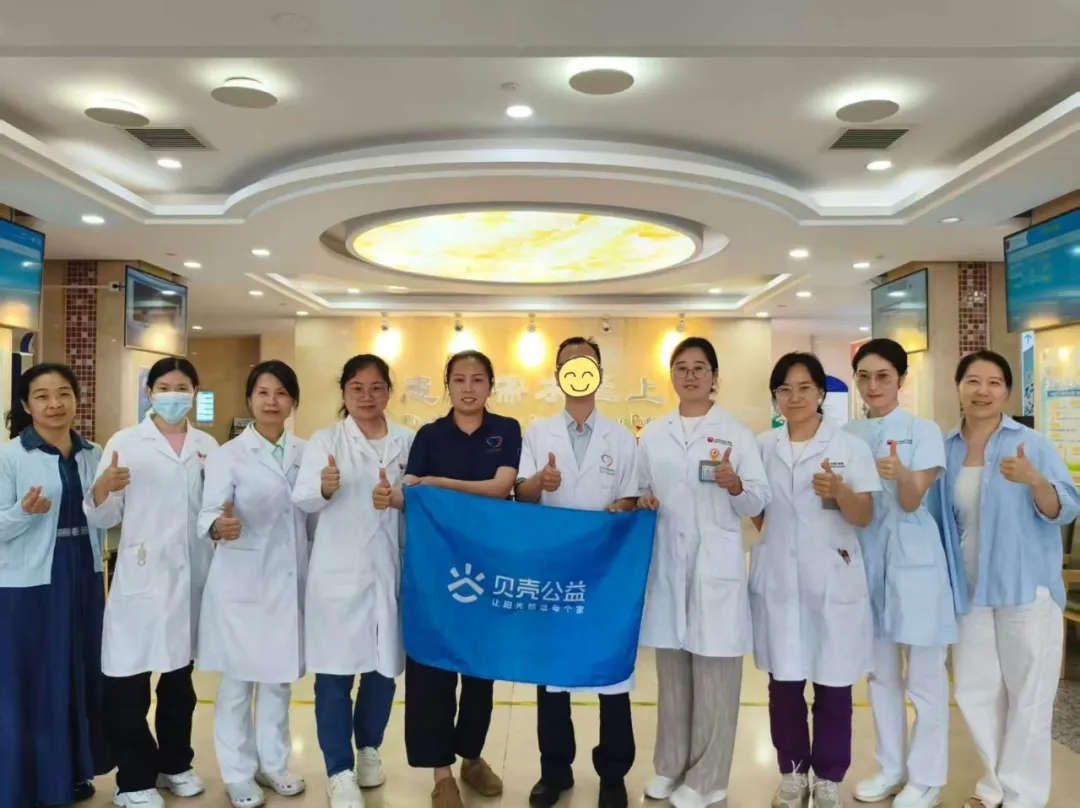
A Promise Kept for Nearly Nine Years
“What is the longest you have ever stuck with something?” Some say three years, some say five. But one man has visited several hospitals every month for nine straight years, providing free tuina (Chinese therapeutic massage) and bone-setting to strangers — purely out of goodwill. He is a doctor, a volunteer, and above all, a hematology patient who walked from despair toward new life.
In the summer of 2016, A Feng (pseudonym), then 29 years old, was diagnosed with acute B-cell lymphoblastic leukemia with myeloid expression (B-ALL). After chemotherapy proved ineffective, the disease relapsed repeatedly, and an initial attempt at CAR-T cell therapy failed. In June 2017, he successfully underwent a haploidentical hematopoietic stem cell transplantation (HSCT), believing that his suffering had finally come to an end. Yet only four and a half months later, the tumor recurred. After multiple referrals, in December 2017, A Feng arrived at Beijing GOBROAD Boren Hospital, where he sought help from the immunotherapy team led by Dr. Tong Chunrong and Dr. Lin Yuehui. Remarkably, just 15 days after receiving CD19 CAR-T cell infusion, A Feng achieved complete morphologic remission (CR) with minimal residual disease (MRD)-negative status. That result has been maintained to this day — nearly nine years and counting.
Persistent Low-Grade Fever Leads to an Acute Leukemia Diagnosis
In early summer 2016, A Feng began experiencing unexplained low-grade fever and fatigue. During that period, he returned to his hometown in Handan, Hebei Province, to help harvest wheat. At 90 kg, he could previously lift a sack of wheat effortlessly; that year, carrying a single sack left him breathless. The symptoms would ease after a short rest, so he did not take it seriously. By August, however, his body could no longer cope, and he went to a local hospital for examination.
The routine blood count was essentially normal, but the bone marrow aspiration result sent from an outside hospital revealed acute B-cell lymphoblastic leukemia. Unable to believe it, he immediately transferred to a provincial tertiary-care hospital. Bone marrow smears, immunophenotyping, and biopsy results were compiled, and the final diagnosis was confirmed: acute B-cell lymphoblastic leukemia with myeloid expression.
“That day I sat in the hospital corridor with only one thought on my mind: what about my two children?” A Feng recalls. “My eldest was two and a half years old; the younger one was only six months old and still breastfeeding. If I were to fall, what would become of them?”
Repeated Chemotherapy Setbacks; Relapse Just Four and a Half Months After Transplant
After diagnosis, A Feng began chemotherapy at the provincial hospital. His first regimen, VCDLP, ended with no remission. He switched to VCIDL for re-induction, and the bone marrow finally showed remission. But that relief did not last long. In November 2016, flow cytometry detected 5.9% abnormal immature B cells. Another switch to VCLD reduced residual disease slightly; by year-end, he was on Hyper-CVAD-B.
Regimen after regimen, yet the residual disease persisted like a ghost. It felt like a tug-of-war without a referee — neither side could win.
In April 2017, a follow-up bone marrow report showed blasts accounting for 14.9% — the disease had relapsed. His attending physician told him that continuing chemotherapy would be of limited benefit and recommended exploring other treatment options. For the first time since falling ill, A Feng felt true despair.
He traveled to Beijing, moving between hospitals in search of CAR-T cell immunotherapy. At that time, CAR-T was still a frontier treatment; few hospitals could perform it, and costs were high. After great effort, he connected with one hospital — blood was drawn, cells cultured, preconditioning administered — but unfortunately, the cell culture failed.
Forced to transfer to another hospital, his body developed recurrent high fever, perianal infection, oral ulcers, and blood cultures grew Escherichia coli… After months of struggle, when his condition finally improved, a follow-up bone marrow showed complete remission — although flow cytometry still detected some residual disease, the physician assessed him as eligible for transplant.
He transferred to a third hospital, and on June 2, 2017, he entered the sterile transplant unit for preconditioning and successfully completed a haploidentical hematopoietic stem cell transplantation. After transplant, white blood cells and platelets engrafted smoothly, with no significant graft-versus-host disease (GVHD). On the day of discharge, the sunshine felt bright. He felt as though his life had been given back to him.
Yet barely four and a half months later, a follow-up bone marrow revealed blasts once again. After tapering immunosuppressants, flow cytometry still showed residual disease. Physicians tried other interventions, but liver function impairment soon followed. A Feng did not burden his family with these details; he simply felt he was racing against illness — he could not stop, he could not lose.
CAR-T Cell Therapy Brings Nearly Nine Years of Sustained Complete Remission
In December 2017, A Feng arrived at Beijing GOBROAD Boren Hospital. In fact, when he had first prepared for transplant, he had wanted to choose this hospital, but Boren had only recently been established and could not yet accept haploidentical transplant patients. This time, the immunotherapy team led by Dr. Tong Chunrong and Dr. Lin Yuehui conducted a comprehensive evaluation and decided to proceed with CD19 CAR-T cell infusion.
On December 14, 2017, A Feng began FC-regimen preconditioning; on December 19, he received the autologous cultured CD19 CAR-T cell infusion. During preconditioning, his liver function deteriorated sharply — transaminases and bilirubin skyrocketed. When he looked in the mirror, he was alarmed: from head to toe, his entire body had turned yellow with severe jaundice. Dr. Tong Chunrong, Dr. Wu Tong, and Dr. Lin Yuehui immediately convened consultations and iteratively adjusted his treatment plan — they needed to curb the progression of liver injury without compromising the anti-tumor activity of the infused CAR-T cells. The balance was exceedingly delicate. After nearly two weeks of meticulous management, his indicators finally began to decline.
During his time at Boren, A Feng experienced many things that felt “different”. Dr. Tong and Dr. Lin always patiently explained during ward rounds; whenever he did not understand something, they would elaborate tirelessly until he grasped it fully. Such patience was something he had never encountered at other hospitals. The staff were professional and warm; meeting in the corridors, they would call his name as if greeting family. There was also the family kitchen open to caregivers — more than a place to cook, it was a harbor where everyone huddled together for warmth.
A Feng still remembers the words hanging on the wall of the Boren outpatient hall: “Patients come first.” Those words remain engraved in his heart.
From Beneficiary to Giver: Nearly Nine Years of Volunteer Service Touching Thousands
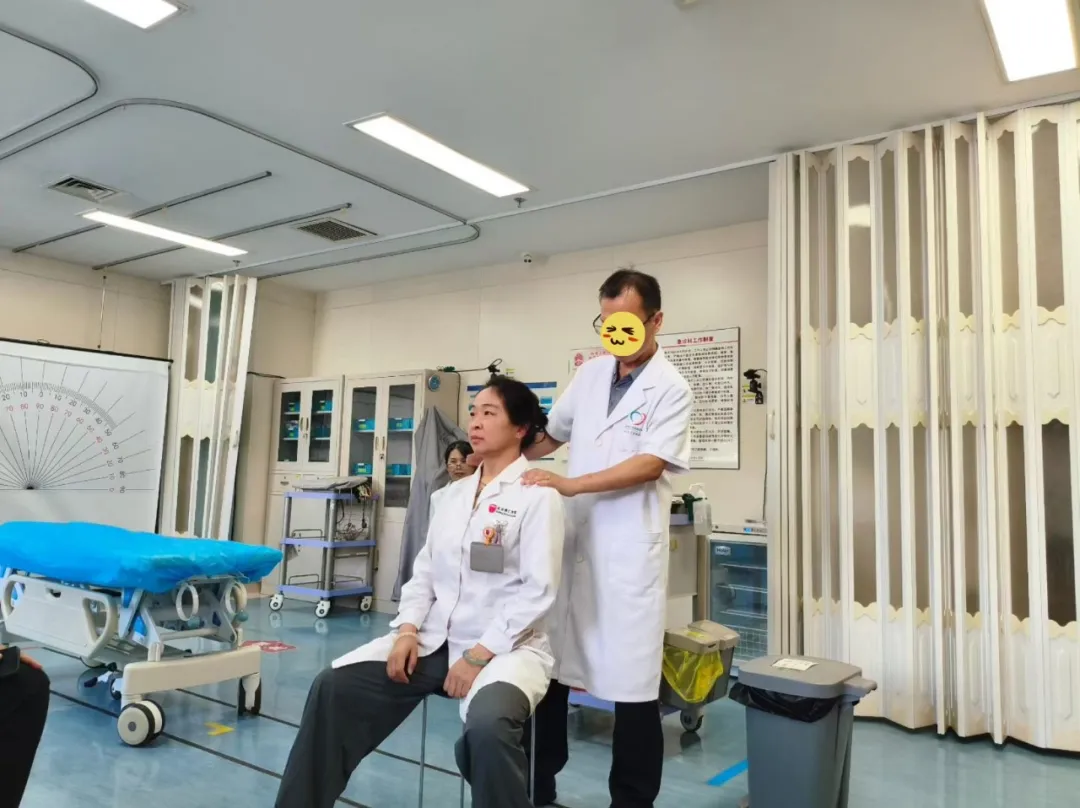
During his illness, A Feng received heartfelt assistance from many kind-hearted strangers. People he had never met sent help in his hour of need. That warmth stayed with him, and he dared not forget it. So as soon as his body recovered, he wanted to do something in return.
Moreover, having recovered well, he wanted to show others a positive face. When he lay in his hospital bed, he had yearned to see someone who had been cured stand before him and say: “Look at me — I was sicker than you, and now I am fine.” Today, he is willing to become that person who lets more people see hope.
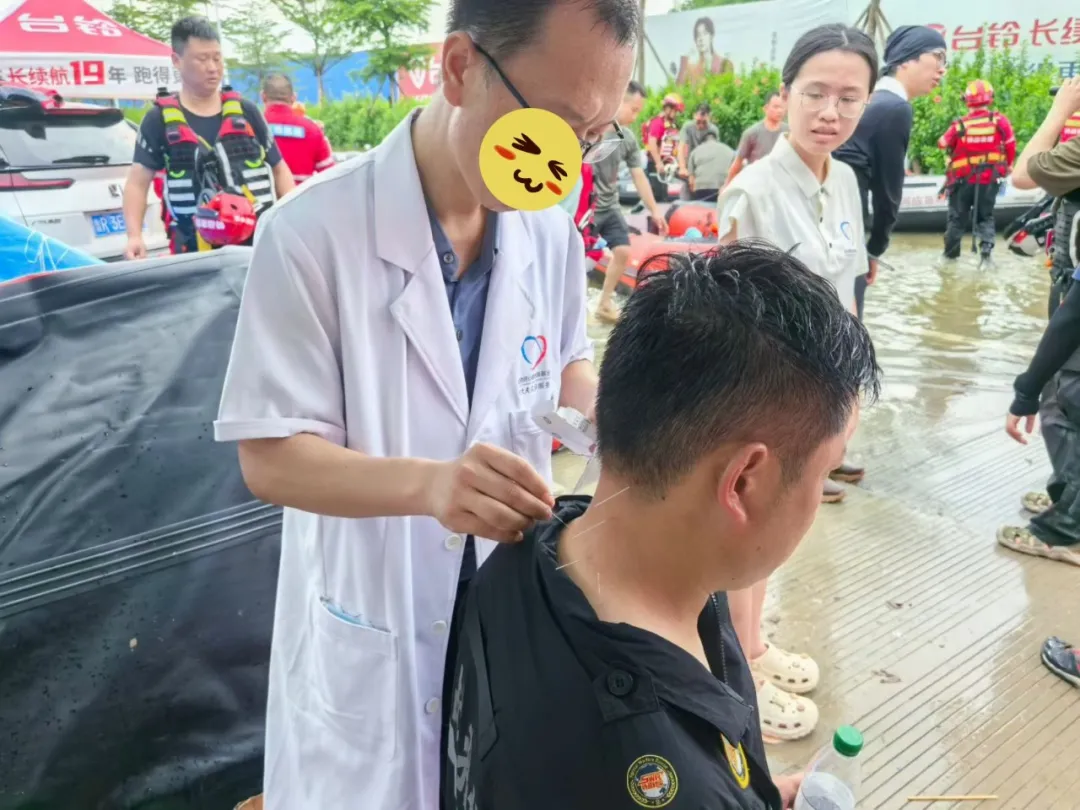
A Feng originally studied acupuncture and tuina massage. In early 2018, when he returned to Boren for a follow-up visit, he noticed that in the hospital lobby, corridors, and wards, many family caregivers were either dozing while leaning against walls or rubbing their own shoulders. He knew that state all too well — during his own hospitalization, his family had kept watch day and night, enduring back and shoulder pain yet unwilling to step away even for a moment. So he approached them and said, “Let me give you a massage.” After massaging one person, the next asked, “Can you massage me too?” He agreed. One after another, and the morning was gone.
That first massage launched a journey of nearly nine years, visiting almost every single month. When crowds gathered, his hands would tremble from exhaustion, but his heart felt deeply fulfilled — a feeling that no amount of money can buy. Often, as he massaged, he chatted with them. Afterward, their bodies relaxed, and the words they had bottled up came pouring out. They were willing to speak, and he was willing to listen.
To Fellow Patients: Amplify Optimism, Reset Negativity to Zero
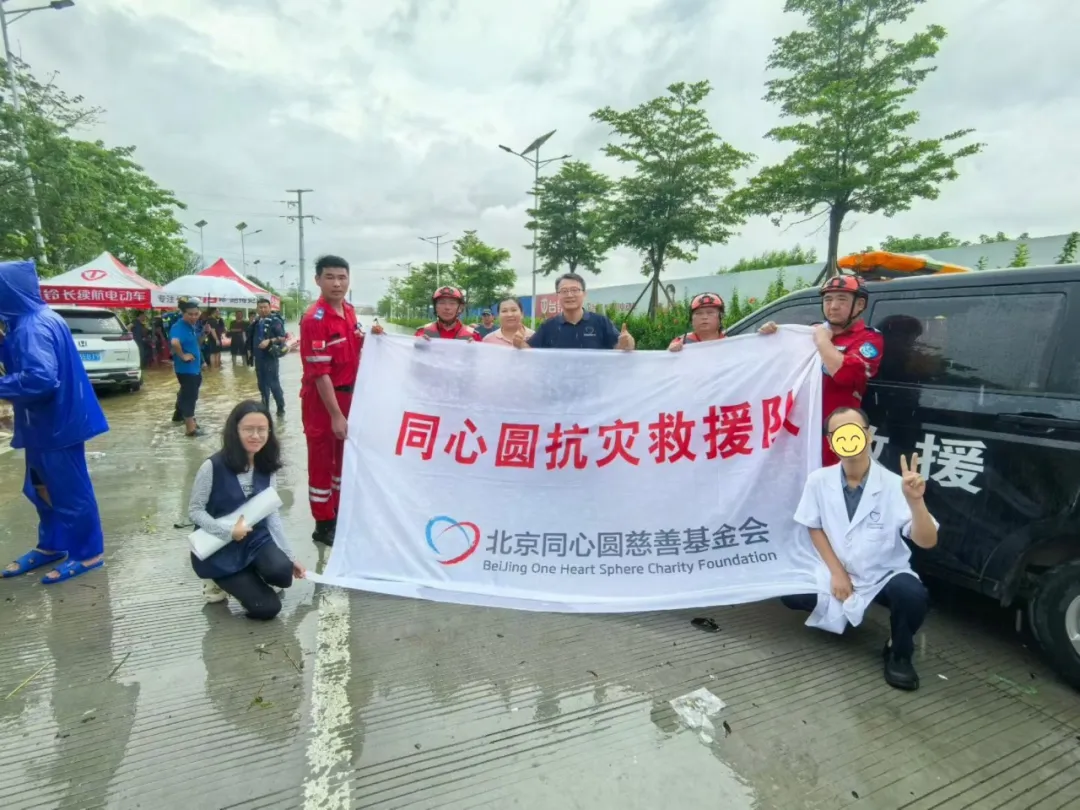
Nearly nine years on, he is still doing this. The doctors at Boren pulled him back from the edge of the cliff and gave him a second life. What he can give back is to use that second life to warm more people who are walking their own “night road” of illness.
Speaking of which, he wants to share a few more words with fellow patients. Over these years of illness, his outlook has changed profoundly. He used to think only of building a career and chasing conventional markers of success. Now he truly understands — health matters most, family matters most. Whether money is abundant or scarce, life goes on. A family safe together is worth more than anything.
Fellow patients often ask how he maintains such a positive mindset. His approach: take in words that comfort and benefit you; let useless words slide past. We might borrow a bit of an “Ah Q spirit” — focus more on the light within ourselves. Amplify optimism, drive negativity down to its minimum. When a person is happy, qi and blood flow freely and the whole body feels at ease; when sad, everything feels uncomfortable. The power of optimism is far greater than you imagine.
He wants to leave every friend currently undergoing treatment with one sentence: “As long as you are alive, there is hope.” He believed those words back then, and now he hopes you will believe them too.
Today, his two children — one in middle school, the other about to enter fifth grade — are his greatest treasure. Every month, he still comes to Boren, where he massages the shoulders and loosens the lower backs of caregivers and medical staff alike. When the work is done and he sets off on the journey home, if the sunshine happens to be bright, he feels it from the bottom of his heart: “It is good to be alive. Being able to help others is even better.”
Medical Commentary: B-ALL Overview
Acute B-cell lymphoblastic leukemia (B-ALL) is a common subtype of acute leukemia, originating primarily from B-lineage lymphoid progenitor cells. It occurs most frequently in children (especially ages 2–5), accounting for 75%–80% of childhood acute leukemias. Adult B-ALL incidence follows a bimodal distribution, concentrated in elderly and young-adult age groups, representing 20%–30% of adult ALL cases.
Etiology: Not fully elucidated; generally considered the result of interactions among genetic, environmental, and viral factors.
Clinical manifestations: Primarily caused by leukemic suppression of normal hematopoiesis and organ infiltration, including anemia, bleeding, and infection symptoms; hepatosplenomegaly and painless lymphadenopathy; bone and joint pain; central nervous system infiltration (headache, vomiting, blurred vision, neck stiffness); and testicular infiltration in male patients (painless testicular swelling).
Diagnosis: Requires comprehensive clinical presentation combined with laboratory and imaging studies, centered on MICM integrated diagnosis (Morphology, Immunology, Cytogenetics, Molecular biology). Bone marrow biopsy is the gold standard, with diagnosis requiring ≥20% blasts plus immature lymphocytes. Immunophenotyping confirms B-cell lineage. Cytogenetic and molecular studies detect chromosomal karyotypes (e.g., hyperdiploidy, Philadelphia chromosome), fusion genes, and gene mutations for prognostic stratification and precision treatment guidance.
Treatment and prognosis: Children (especially aged 1–9 years with low initial white blood cell counts) are highly chemosensitive, with 5-year survival rates reaching 85%–90%. Adult chemotherapy cure rates are relatively poorer: low-to-intermediate risk groups generally 30%–50%; high-risk adults (especially those over 35, high initial WBC, high-risk gene mutations) typically 10%–20%, making cure by chemotherapy alone difficult — allogeneic HSCT improves outcomes. In recent years, immunotherapy and targeted therapy have represented the greatest breakthrough, including CAR-T, monoclonal antibodies, and targeted agents capable of precisely identifying and eliminating leukemic cells to achieve deep remission, advancing the timing of immunotherapy and extending patient survival — even achieving cures.
A Feng’s case of B-ALL, marked by repeated relapses after chemotherapy and relapse again after allogeneic HSCT, was undoubtedly unfortunate. Yet his courage to attempt CAR-T therapy after relapse — achieving a cure with CAR-T alone — was equally fortunate. The treatment journey was fraught with difficulty, yet he did not complain about fate or sink into despondency. Instead, once his body recovered, he threw himself into public welfare within his capacity, helping and influencing more people for nearly nine years. His deeds and optimistic spirit inspire those around him — heroes walk among us, and we hope more patients will recover as he did.
— Dr. Lin Yuehui, Team of Dr. Tong Chunrong
About the Experts
Dr. Tong Chunrong (竾春容)
Research Director, Beijing GOBROAD Boren Hospital
Director, Department of Hematology/Oncology I
GOBROAD Medicine (Hematology) Beijing Research Center
Master of Medicine, Tongji Medical University
Specialization: With over 40 years of experience in clinical hematology and laboratory research, Dr. Tong specializes in malignant tumors — especially acute leukemia, lymphoma, and multiple myeloma — via immunotherapy. She is among China’s earliest pioneers in immunotherapy (CAR-T, CIK, NK, etc.). She practices integrated hematologic diagnosis spanning cytomorphology, cytochemistry, immunohistochemistry, flow cytometry, karyotyping and FISH, gene diagnostics, pathogen analysis, and pharmacogenomics to deliver personalized treatment.
Academic appointments: Standing Committee Member, Clinical Professional Committee, China Medicinal Biotechnology Association; Committee Member, Biotherapy Branch, China Anti-Cancer Association; Committee Member, Hematologic Tumor Branch, China Anti-Cancer Association; Vice-Chairman, Hematologic Tumor Professional Committee, Chinese Medical Association Laboratory Physician Branch; Vice-Chairman, Beijing Blood Cell Examination Expert Committee; Deputy Group Leader, Remote Diagnostic Training Group, Beijing Society of Laboratory Medicine; Editorial Board, Chinese Journal of Biotherapy.
Dr. Lin Yuehui (林路边)
Director, Ward 9, Department of Hematology/Oncology I
Associate Chief Physician
Beijing GOBROAD Boren Hospital
Master of Medicine, Institute of Hematology, Chinese Academy of Medical Sciences
Specialization: With nearly 20 years of clinical hematology experience, Dr. Lin focuses on chemotherapy, targeted therapy, and CAR-T related treatments for hematologic system diseases (including lymphoid malignancies and acute myeloid leukemia CAR-T). He has also worked in flow cytometry and pathological diagnosis of hematologic tumors while studying cell morphology, giving him a strong foundation in laboratory diagnosis of hematologic malignancies. He specializes in integrated diagnosis and immunotherapy/targeted therapy of hematologic tumors, with extensive experience in chemotherapy and cellular immunotherapy for hematologic diseases.
Academic appointments: Member, Leukemia Immunocell Therapy Collaboration Group, China Hematology Specialist Alliance; Associate Editor-in-Chief, Lymphoma Integrated Diagnosis.