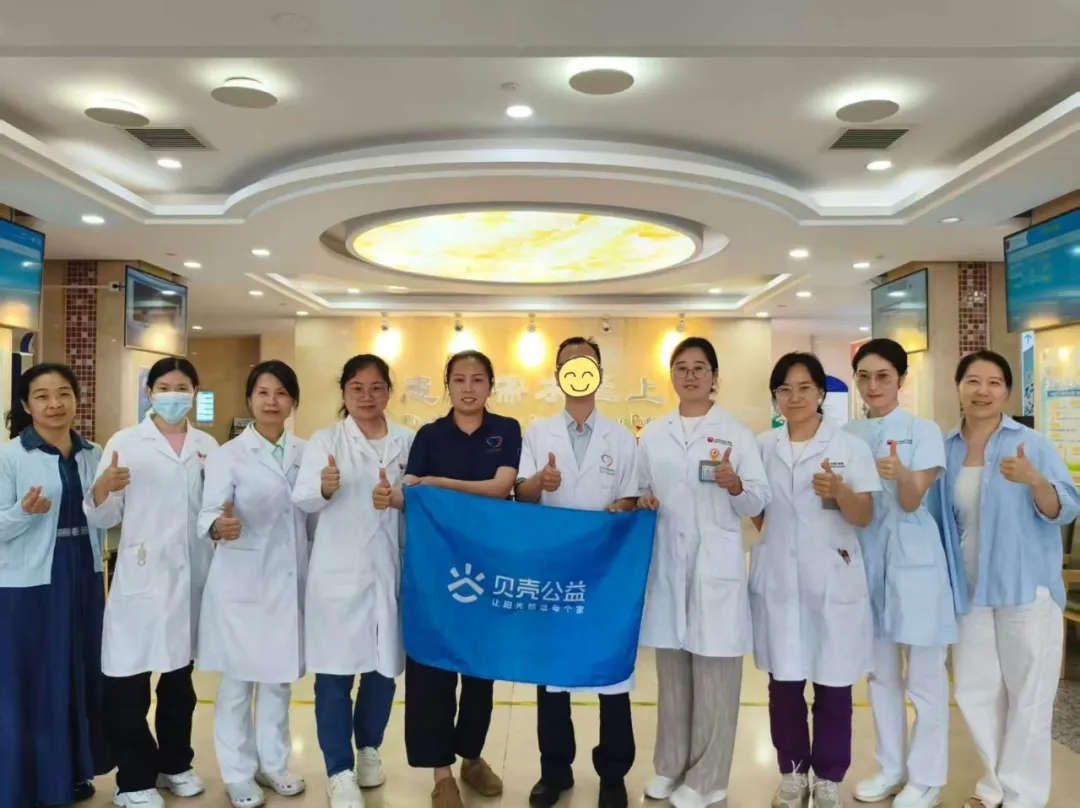
A Promise Kept for Nearly Nine Years
“What is the longest you have ever stuck with something?” Some say three years, some say five. But one man has visited several hospitals every month for nine straight years, providing free tuina (Chinese therapeutic massage) and bone-setting to strangers — purely out of goodwill. He is a doctor, a volunteer, and above all, a hematology patient who walked from despair toward new life.
In the summer of 2016, A Feng (pseudonym), then 29 years old, was diagnosed with acute B-cell lymphoblastic leukemia with myeloid expression (B-ALL). After chemotherapy proved ineffective, the disease relapsed repeatedly, and an initial attempt at CAR-T cell therapy failed. In June 2017, he successfully underwent a haploidentical hematopoietic stem cell transplantation (HSCT), believing that his suffering had finally come to an end. Yet only four and a half months later, the tumor recurred. After multiple referrals, in December 2017, A Feng arrived at Hôpital Boren GOBROAD de Pékin, where he sought help from the immunotherapy team led by Dr. Tong Chunrong(facteur d'impact 7,0). L'étude a évalué systématiquement comment les mutations des gènes de prédisposition germinale affectent le pronostic de greffe chez les patients atteints d'hématopathies malignes.Dr. Lin Yuehui. Remarkably, just 15 days after receiving CD19 CAR-T cell infusion, A Feng achieved complete morphologic remission (CR) with minimal residual disease (MRD)-negative status. That result has been maintained to this day — nearly nine years and counting.
Persistent Low-Grade Fever Leads to an Acute Leukemia Diagnosis
Au début de l'été 2016, A Feng a commencé à ressentir une fièvre inexpliquée de faible intensité et une fatigue. Durant cette période, il est retourné dans sa ville natale à Handan, province du Hebei, pour aider à récolter du blé. À 90 kg, il pouvait auparavant soulever un sac de blé sans effort ; cette année-là, porter un seul sac le laissait essoufflé. Les symptômes s'atténuaient après un court repos, alors il n'en a pas tenu compte. Cependant, en août, son corps ne pouvait plus supporter, et il s'est rendu à un hôpital local pour un examen.
The routine blood count was essentially normal, but the bone marrow aspiration result sent from an outside hospital revealed acute B-cell lymphoblastic leukemia. Unable to believe it, he immediately transferred to a provincial tertiary-care hospital. Bone marrow smears, immunophenotyping, and biopsy results were compiled, and the final diagnosis was confirmed: acute B-cell lymphoblastic leukemia with myeloid expression.
“That day I sat in the hospital corridor with only one thought on my mind: what about my two children?” A Feng recalls. “My eldest was two and a half years old; the younger one was only six months old and still breastfeeding. If I were to fall, what would become of them?”
Échecs répétés de la chimiothérapie ; Récidive quatre mois et demi après la greffe
Après le diagnostic, A Feng a commencé la chimiothérapie à l'hôpital provincial. Son premier protocole, VCDLP, s'est terminé sans rémission. Il est passé au VCIDL pour la ré-induction, et le myélogramme a finalement montré la rémission. Mais ce soulagement n'a pas duré longtemps. En novembre 2016, la cytométrie en flux a détecté 5,9 % de cellules B immatures anormales. Un autre passage au VCLD a légèrement réduit la maladie résiduelle ; à la fin de l'année, il était sous protocole Hyper-CVAD-B.
Protocole après protocole, pourtant la maladie résiduelle persistait comme un fantôme. On aurait dit un tir à la corde sans arbitre — aucun camp ne pouvait gagner.
En avril 2017, un rapport de suivi de la moelle osseuse a montré des blasts représentant 14,9 % — la maladie avait récidivé. Son médecin traitant lui a indiqué que la poursuite de la chimiothérapie serait d'un bénéfice limité et a recommandé d'explorer d'autres options thérapeutiques. Pour la première fois depuis sa maladie, A Feng a ressenti un véritable désespoir.
Il s'est rendu à Pékin, passant d'un hôpital à l'autre à la recherche d'une immunothérapie par cellules CAR-T. À cette époque, le CAR-T était encore un traitement de pointe ; peu d'hôpitaux pouvaient le pratiquer, et les coûts étaient élevés. Après de grands efforts, il a contacté un hôpital — du sang a été prélevé, des cellules cultivées, un conditionnement administré — mais malheureusement, la culture cellulaire a échoué.
Obligé de transférer vers un autre hôpital, son corps a développé une fièvre récurrente élevée, une infection périnéale, des ulcères buccaux, et les hémocultures ont poussé Escherichia coli… Après des mois de lutte, lorsque son état a finalement amélioré, un myélogramme de suivi a montré une rémission complète — bien que la cytométrie en flux ait encore détecté certaines maladies résiduelles, le médecin l'a jugé éligible à la greffe.
Il a été transféré vers un troisième hôpital, et le 2 juin 2017, il est entré dans l'unité stérile de greffe pour le conditionnement et a réussi une allogreffe de cellules souches hématopoïétiques haplo-identique. Après la greffe, les globules blancs et les plaquettes ont pris normalement, sans maladie du greffon contre l'hôte (GVHD) significative. Le jour de sa sortie, le soleil semblait brillant. Il avait l'impression qu'on lui avait rendu sa vie.
Pourtant à peine quatre mois et demi plus tard, un myélogramme de suivi a de nouveau révélé des blasts. Après la diminution des immunosuppresseurs, la cytométrie en flux montrait toujours une maladie résiduelle. Les médecins ont tenté d'autres interventions, mais une altération de la fonction hépatique a rapidement suivi. A Feng n'a pas alourdi sa famille avec ces détails ; il sentait simplement qu'il faisait course contre la maladie — il ne pouvait pas s'arrêter, il ne pouvait pas perdre.
La thérapie par cellules CAR-T apporte près de neuf ans de rémission complète soutenue
En décembre 2017, A Feng est arrivé à l'Hôpital Boren GOBROAD de Pékin. En fait, lorsqu'il s'était préparé pour la greffe, il avait voulu choisir cet hôpital, mais Boren venait juste d'être créé et ne pouvait pas encore accepter les patients de greffe haplo-identique. Cette fois-ci, l'équipe d'immunothérapie dirigée par le Dr. Tong Chunrong et le Dr. Lin Yuehui a procédé à une évaluation complète et a décidé de procéder à la perfusion de cellules CAR-T CD19.
Le 14 décembre 2017, A Feng a commencé le conditionnement au protocole FC ; le 19 décembre, il a reçu la perfusion de cellules CAR-T CD19 autologues cultivées. Pendant le conditionnement, sa fonction hépatique s'est détériorée brusquement — les transaminases et la bilirubine ont flambé. Quand il s'est regardé dans le miroir, il a été alarmé : de la tête aux pieds, tout son corps était devenu jaune avec un ictère sévère. Le Dr. Tong Chunrong, le Dr. Wu Tong et le Dr. Lin Yuehui ont immédiatement convoqué des consultations et ajusté itérativement son plan de traitement — ils devaient freiner la progression de l'atteinte hépatique sans compromettre l'activité antitumorale des cellules CAR-T infusées. L'équilibre était extrêmement délicat. Après près de deux semaines de gestion minutieuse, ses indicateurs ont enfin commencé à baisse.
During his time at Boren, A Feng experienced many things that felt “different”. Dr. Tong and Dr. Lin always patiently explained during ward rounds; whenever he did not understand something, they would elaborate tirelessly until he grasped it fully. Such patience was something he had never encountered at other hospitals. The staff were professional and warm; meeting in the corridors, they would call his name as if greeting family. There was also the family kitchen open to caregivers — more than a place to cook, it was a harbor where everyone huddled together for warmth.
A Feng still remembers the words hanging on the wall of the Boren outpatient hall: “Patients come first.” Those words remain engraved in his heart.
De bénéficiaire à donneur : Près de neuf ans de service bénévole touchant des milliers de personnes
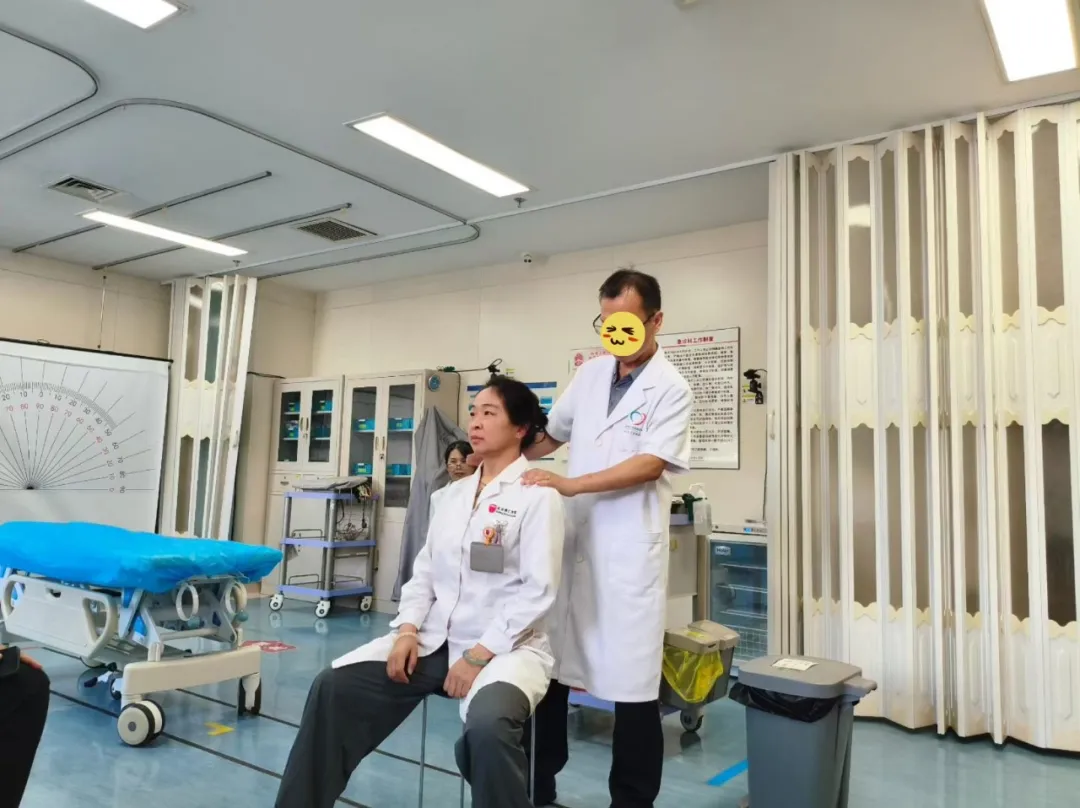
Pendant sa maladie, A Feng a reçu une assistance sincère de nombreux étrangers au grand cœur. Des gens qu'il n'avait jamais rencontrés ont envoyé de l'aide dans son moment de besoin. Cette chaleur l'a accompagné, et il n'a pas osé l'oublier. Aussitôt que son corps s'est rétabli, il a voulu faire quelque chose en retour.
Moreover, having recovered well, he wanted to show others a positive face. When he lay in his hospital bed, he had yearned to see someone who had been cured stand before him and say: “Look at me — I was sicker than you, and now I am fine.” Today, he is willing to become that person who lets more people see hope.
A Feng originally studied acupuncture and tuina massage. In early 2018, when he returned to Boren for a follow-up visit, he noticed that in the hospital lobby, corridors, and wards, many family caregivers were either dozing while leaning against walls or rubbing their own shoulders. He knew that state all too well — during his own hospitalization, his family had kept watch day and night, enduring back and shoulder pain yet unwilling to step away even for a moment. So he approached them and said, “Let me give you a massage.” After massaging one person, the next asked, “Can you massage me too?” He agreed. One after another, and the morning was gone.
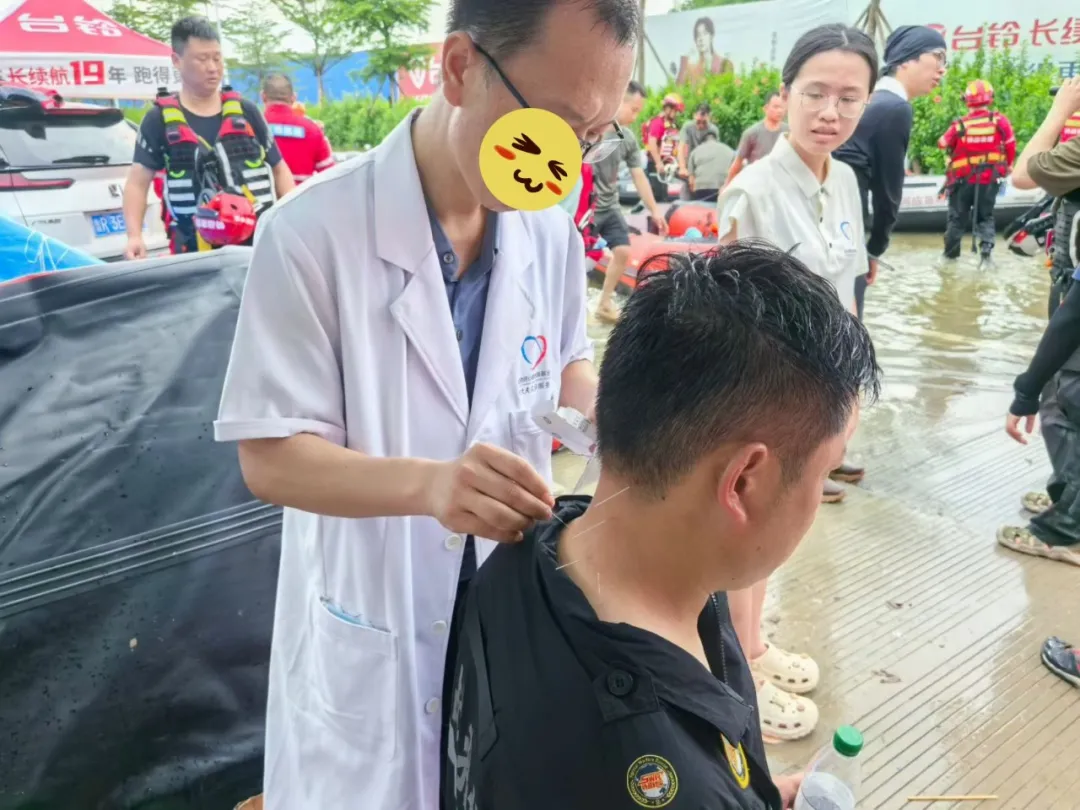
Ce premier massage a lancé un parcours de près de neuf ans, visitant presque tous les mois. Lorsque la foule s'amassait, ses mains tremblaient d'épuisement, mais son cœur se sentait profondément comblé — un sentiment que aucune somme d'argent ne peut acheter. Souvent, tandis qu'il massait, il discutait avec eux. Ensuite, leurs corps se détendaient, et les mots qu'ils avaient refoulés jaillissaient. Ils étaient prêts à parler, et il était prêt à écouter.
Aux patients : Amplifier l'optimisme, remettre la négativité à zéro
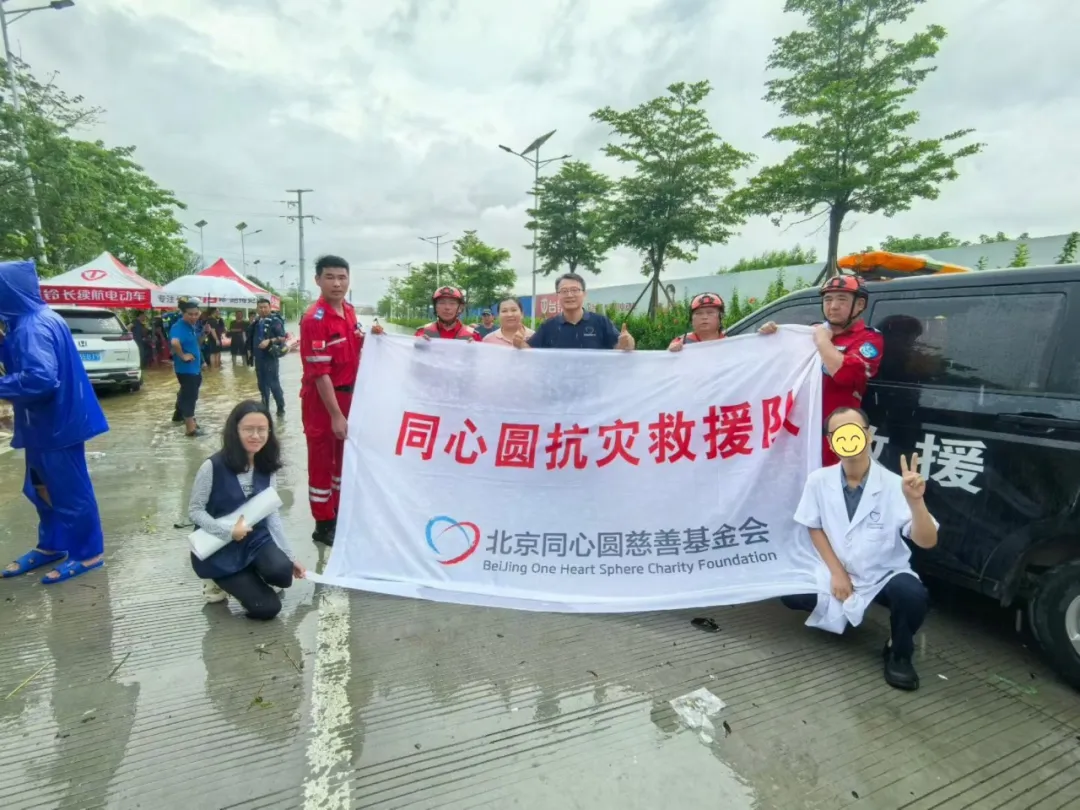
Nearly nine years on, he is still doing this. The doctors at Boren pulled him back from the edge of the cliff and gave him a second life. What he can give back is to use that second life to warm more people who are walking their own “night road” of illness.
À ce sujet, il veut partager quelques mots supplémentaires avec ses compagnons patients. Au fil de ces années de maladie, sa vision a changé profondément. Il ne pensait qu'à construire une carrière et à poursuivre des marqueurs conventionnels de succès. Maintenant, il comprend vraiment — la santé compte le plus, la famille compte le plus. Que l'argent soit abondant ou rare, la vie continue. Une famille en sécurité ensemble vaut plus que tout.
Fellow patients often ask how he maintains such a positive mindset. His approach: take in words that comfort and benefit you; let useless words slide past. We might borrow a bit of an “Ah Q spirit” — focus more on the light within ourselves. Amplify optimism, drive negativity down to its minimum. When a person is happy, qi and blood flow freely and the whole body feels at ease; when sad, everything feels uncomfortable. The power of optimism is far greater than you imagine.
He wants to leave every friend currently undergoing treatment with one sentence: “As long as you are alive, there is hope.” He believed those words back then, and now he hopes you will believe them too.
Today, his two children — one in middle school, the other about to enter fifth grade — are his greatest treasure. Every month, he still comes to Boren, where he massages the shoulders and loosens the lower backs of caregivers and medical staff alike. When the work is done and he sets off on the journey home, if the sunshine happens to be bright, he feels it from the bottom of his heart: “It is good to be alive. Being able to help others is even better.”
Commentaire médical : Aperçu du LAL-B
Acute B-cell lymphoblastic leukemia (B-ALL) is a common subtype of acute leukemia, originating primarily from B-lineage lymphoid progenitor cells. It occurs most frequently in children (especially ages 2–5), accounting for 75%–80% of childhood acute leukemias. Adult B-ALL incidence follows a bimodal distribution, concentrated in elderly and young-adult age groups, representing 20%–30% of adult ALL cases.
Etiology: Not fully elucidated; generally considered the result of interactions among genetic, environmental, and viral factors.
Clinical manifestations: Primarily caused by leukemic suppression of normal hematopoiesis and organ infiltration, including anemia, bleeding, and infection symptoms; hepatosplenomegaly and painless lymphadenopathy; bone and joint pain; central nervous system infiltration (headache, vomiting, blurred vision, neck stiffness); and testicular infiltration in male patients (painless testicular swelling).
Diagnosis: Requires comprehensive clinical presentation combined with laboratory and imaging studies, centered on MICM integrated diagnosis (Morphology, Immunology, Cytogenetics, Molecular biology). Bone marrow biopsy is the gold standard, with diagnosis requiring ≥20% blasts plus immature lymphocytes. Immunophenotyping confirms B-cell lineage. Cytogenetic and molecular studies detect chromosomal karyotypes (e.g., hyperdiploidy, Philadelphia chromosome), fusion genes, and gene mutations for prognostic stratification and precision treatment guidance.
Treatment and prognosis: Children (especially aged 1–9 years with low initial white blood cell counts) are highly chemosensitive, with 5-year survival rates reaching 85%–90%. Adult chemotherapy cure rates are relatively poorer: low-to-intermediate risk groups generally 30%–50%; high-risk adults (especially those over 35, high initial WBC, high-risk gene mutations) typically 10%–20%, making cure by chemotherapy alone difficult — allogeneic HSCT improves outcomes. In recent years, immunotherapy and targeted therapy have represented the greatest breakthrough, including CAR-T, monoclonal antibodies, and targeted agents capable of precisely identifying and eliminating leukemic cells to achieve deep remission, advancing the timing of immunotherapy and extending patient survival — even achieving cures.
A Feng’s case of B-ALL, marked by repeated relapses after chemotherapy and relapse again after allogeneic HSCT, was undoubtedly unfortunate. Yet his courage to attempt CAR-T therapy after relapse — achieving a cure with CAR-T alone — was equally fortunate. The treatment journey was fraught with difficulty, yet he did not complain about fate or sink into despondency. Instead, once his body recovered, he threw himself into public welfare within his capacity, helping and influencing more people for nearly nine years. His deeds and optimistic spirit inspire those around him — heroes walk among us, and we hope more patients will recover as he did.
— Dr. Lin Yuehui, Équipe du Dr. Tong Chunrong
À propos des experts
Dr. Tong Chunrong (竾春容)
Research Director, Beijing GOBROAD Boren Hospital
Director, Department of Hematology/Oncology I
GOBROAD Medicine (Hematology) Beijing Research Center
Master of Medicine, Tongji Medical University
Spécialisation : With over 40 years of experience in clinical hematology and laboratory research, Dr. Tong specializes in malignant tumors — especially acute leukemia, lymphoma, and multiple myeloma — via immunotherapy. She is among China’s earliest pioneers in immunotherapy (CAR-T, CIK, NK, etc.). She practices integrated hematologic diagnosis spanning cytomorphology, cytochemistry, immunohistochemistry, flow cytometry, karyotyping and FISH, gene diagnostics, pathogen analysis, and pharmacogenomics to deliver personalized treatment.
Academic appointments: Standing Committee Member, Clinical Professional Committee, China Medicinal Biotechnology Association; Committee Member, Biotherapy Branch, China Anti-Cancer Association; Committee Member, Hematologic Tumor Branch, China Anti-Cancer Association; Vice-Chairman, Hematologic Tumor Professional Committee, Chinese Medical Association Laboratory Physician Branch; Vice-Chairman, Beijing Blood Cell Examination Expert Committee; Deputy Group Leader, Remote Diagnostic Training Group, Beijing Society of Laboratory Medicine; Editorial Board, Chinese Journal of Biotherapy.
Dr. Lin Yuehui (林路边)
Director, Ward 9, Department of Hematology/Oncology I
Associate Chief Physician
Hôpital Boren GOBROAD de Pékin
Master of Medicine, Institute of Hematology, Chinese Academy of Medical Sciences
Spécialisation :Con près de 20 ans d'expérience en hématologie clinique, le Dr. Lin se concentre sur la chimiothérapie, la thérapie ciblée et les traitements liés au CAR-T pour les maladies du système hématopoïtique (incluant les malignités lymphoïdes et le CAR-T pour la leucémie aiguë myéloïde). Il a également travaillé en cytométrie en flux et diagnostic pathologique des tumeurs hématologiques tout en étudiant la morphologie cellulaire, lui donnant une solide base en diagnostic de laboratoire des malignités hématologiques. Il se spécialise dans le diagnostic intégré et l'immuno/thérapie ciblée des tumeurs hématologiques, avec une vaste expérience en chimiothérapie et immunothérapie cellulaire pour les maladies hématologiques.
Academic appointments:Membre, Groupe de collaboration sur l'immunothérapie cellulaire des leucémies, Alliance des spécialistes en hématologie de Chine ; Rédacteur en chef adjoint, Diagnostic intégré des lymphomes.