A Note on Why We Share These Stories
This autumn, a patient in our community quietly sent us a very special gift. She wrote down her complete journey from diagnosis to a renewed life — and with it, her trust in us and her gratitude.
Medicine may not be able to promise miracles, but every patient's wholehearted persistence deserves to be seen. May we take this as mutual encouragement, and continue to guard every promise of renewal together with expertise and warmth.
The cicadas of summer have already faded away; the faint cool of early autumn has arrived unnoticed. In the season of Beginning of Autumn, we who gather around to keep one another warm can still slow our steps, feel the turning of the seasons, and embrace the poetry and quiet of this pale early autumn. That alone is no small thing.
What Follows Is Her Own Account
Since my own lung cancer diagnosis more than a year ago, I have never wanted to revisit that period of seeking care. On countless dark nights I asked heaven: why me? But reality stayed silent, so I wiped my tears and kept walking. On this difficult road I met a fellow traveler — a sister-in-arms who is also living with stage IV lung cancer.
One sheet of paper, one diagnosis: advanced lung adenocarcinoma with brain metastases and multiple bone metastases. A craniotomy and her long hair shaved off; six rounds of cross-city chemotherapy; a hard-won fight for lung surgery; a long journey overseas for cell therapy. This is not an inspirational platitude — it is the road this sister actually walked. There was searing pain, there was fear, and there was a stubborn refusal to give anything less than her all. She wrote it for herself, and for every fellow traveler on the same road.
Part 1: One Ordinary Meeting, and Then Everything Changed
On Monday, January 20, 2025, I was still at the office in a meeting, handling routine work, when calamity arrived without warning. For some time I had been vomiting for no clear reason, and at first I put it down to a stomach problem. That afternoon I went to the hospital for a brain MRI, which unexpectedly found a space-occupying lesion close to five centimeters. That same night I was admitted urgently to the neurosurgery department of Zhongda Hospital Affiliated to Southeast University.
On January 21, a brain CT suggested the lesion most likely originated in the lung. I did not shed a single tear — I was still clinging to a sliver of hope. On January 22, a PET-CT confirmed lung adenocarcinoma with brain metastases and multiple bone metastases. That night, the long hair I had kept for years was shaved off entirely; I made jokes at my own reflection to cover the turmoil inside.
On January 23 I underwent a craniotomy, from seven in the morning until three in the afternoon. I woke up more smoothly than expected and was able to get out of bed the next day. I am sincerely grateful to Director Yang Kun and the entire medical and nursing team for their meticulous care.
While I was in hospital I happened to come across the statement that patients with brain metastases mostly survive two to twelve months. For a while I calmly worked out how to arrange things for my two children. Everyone around me urged me not to trust the uneven information online. Pathology soon confirmed lung adenocarcinoma, and the doctors told me there was a good chance of matching a targeted drug, so genetic testing was arranged straight away. After the craniotomy removed the tumor in the right side of my brain, a small four-millimeter nodule remained in the left side, to be dealt with later.
On Chinese New Year's Eve I was discharged, bald, and went home for the holiday. Throughout the whole Spring Festival I took no anti-tumor medication: I waited for the genetic test result while repeatedly watching Professor Han Baohui's patient-education videos to learn about my disease, booked an outpatient appointment in advance, and prepared myself mentally for chemotherapy.
Part 2: Treatment — From Nanjing to Shanghai
On February 16, I drove from Nanjing to Shanghai GOBROAD Cancer Hospital. On the morning of February 17 I had my consultation with Professor Han Baohui and received my genetic test report: an EGFR exon 19 deletion mutation. It was exactly the scenario described in the educational videos, and taking my age into account, Professor Han recommended targeted therapy combined with chemotherapy. Facing treatment I felt no fear; I had only one thought — suppress the tumor as quickly as possible.
I cannot help but marvel at the medical and nursing team at Shanghai GOBROAD Cancer Hospital: the medical environment, the equipment, and the service all put a patient at ease. Director Li Shuang, Dr. Li Hong, Dr. Xu Xiaolin, and the doctor everyone fondly calls the curly-haired doctor, Dr. Wu Bofang — every one of them gave me a great deal of support.
In total I completed six cycles of chemotherapy. Each time I traveled back and forth between Nanjing and Shanghai I tried to adjust my mindset, treating the trip as a short excursion, with my suitcase packed full of snacks, face masks, and skincare. In the bitter days of treatment I did my best to find a little warmth from ordinary life.
After the first cycle of chemotherapy, back in Nanjing, I suddenly coughed up a large amount of blood, and passed a few small clots afterwards. Once I had taken Yunnan Baiyao to stop the bleeding, the situation eased somewhat. Dr. Wang Jirong at the Second Affiliated Hospital of Nanjing Medical University judged that this was bleeding caused by tumor tissue necrosis after chemotherapy. I did not dare take it lightly and immediately rushed back to Shanghai for a follow-up. After Professor Han's assessment I was able to relax — it was confirmed to be tumor necrosis, and no similar dangerous episode occurred again.
Part 3: The Turning Point — A Nodule That Disappeared
Effort eventually found its echo. In early April, a follow-up brain MRI brought a surprise: the four-millimeter nodule in the left side of my brain had vanished. That gave me far more confidence in the effectiveness of osimertinib. The chest CT also showed that a cavity had appeared inside the primary lung tumor — seeing that change, I felt the tumor was being dismantled, little by little.
Six round trips between Shanghai and Nanjing, clearing one hurdle after another. During chemotherapy my white blood cell count dropped to a low of 2.6, while my platelets stayed within the normal range, and I never experienced severe vomiting — which already felt like being exceptionally favored by fate. The side effects showed mostly in my appearance, my complexion gradually turning sallow and dark, but overall it was tolerable.
Part 4: Beyond Chemotherapy — Surgery and MRD
After the sixth cycle of chemotherapy my physical condition gradually improved. Following a comprehensive assessment by my doctors, another treatment opportunity opened up: in August I successfully completed a Da Vinci robotic lobectomy, and my recovery afterwards went even more smoothly than I had expected.
Since then I have continued to actively learn about new treatment approaches, and — as a personal choice I made on my own initiative — I also traveled to Japan to receive cell therapy. During post-operative follow-up I had several consecutive MRD tests: the first three results were weakly positive, and the fourth turned negative. Today I continue to follow the treatment plan my doctors have set out, maintaining osimertinib as single-agent targeted therapy, together with regular re-examinations.
Part 5: Moving Forward, One Three-Month Cycle at a Time
In truth I am a deeply emotional person, and in daily life I cry easily. Yet at both of my major surgeries, and when the diagnosis was confirmed, I did not cry.
Instead, during this year and more of fighting cancer, my employer informed me that my physical condition no longer allowed me to hold a management position. Someone who had once been decisive and fiercely competitive in the workplace was now passively saying goodbye to that career. My body had to endure the torments of surgery and medication, while my spirit had to absorb a professional setback. No one else can truly feel the bitterness of that. However much my family ached for me, they could not fully share the experience. Looking back along this road, there were countless moments when my eyes grew hot — but I could only push the emotions down. Apart from gritting my teeth and holding on, there was no other choice.
A re-examination every three months is a tremendous psychological ordeal. MRI, contrast-enhanced CT — every wait for the report is torment. One part of me aches for what I have to endure through treatment, while another part is deeply afraid of a bad result. It has now been a year since the lung surgery, and I am still taking osimertinib as single-agent maintenance. When a reassuring result comes back I can breathe out and be briefly, genuinely happy. And then, in the blink of an eye, the next three months arrive.
My fellow patients and I keep following cellular therapy, cancer vaccines, and other frontier treatments, full of hope that we can delay the emergence of resistance to targeted drugs for as long as possible.
On this road there are no standard answers. Whatever stage we are at, whatever frame of mind we are in, we have to actively look for a way forward, protect the state we are in today, and try to move in a better direction — meeting each new challenge as it comes.
Postscript
Looking back on all of this, I think each of us has lived through a long, heavy dream.
My sister-in-arms had her long hair shaved before a craniotomy; she traveled between cities for care again and again; she lay awake night after night waiting for follow-up results. The tears that were never shed, the bitterness that had no one to hear it — all of it is hidden inside this journey of seeking treatment.
We do not want to package ourselves as fearless warriors against cancer. We get scared, we get anxious, we dread the result of the next scan. We record all of this simply to preserve what really happened — to remind ourselves, and to tell our fellow travelers: you do not have to force yourself to be strong; being fragile is only human. May all of us, within the conditions we are given, do everything we can, hold on to the present, and live well.
About the Featured Expert
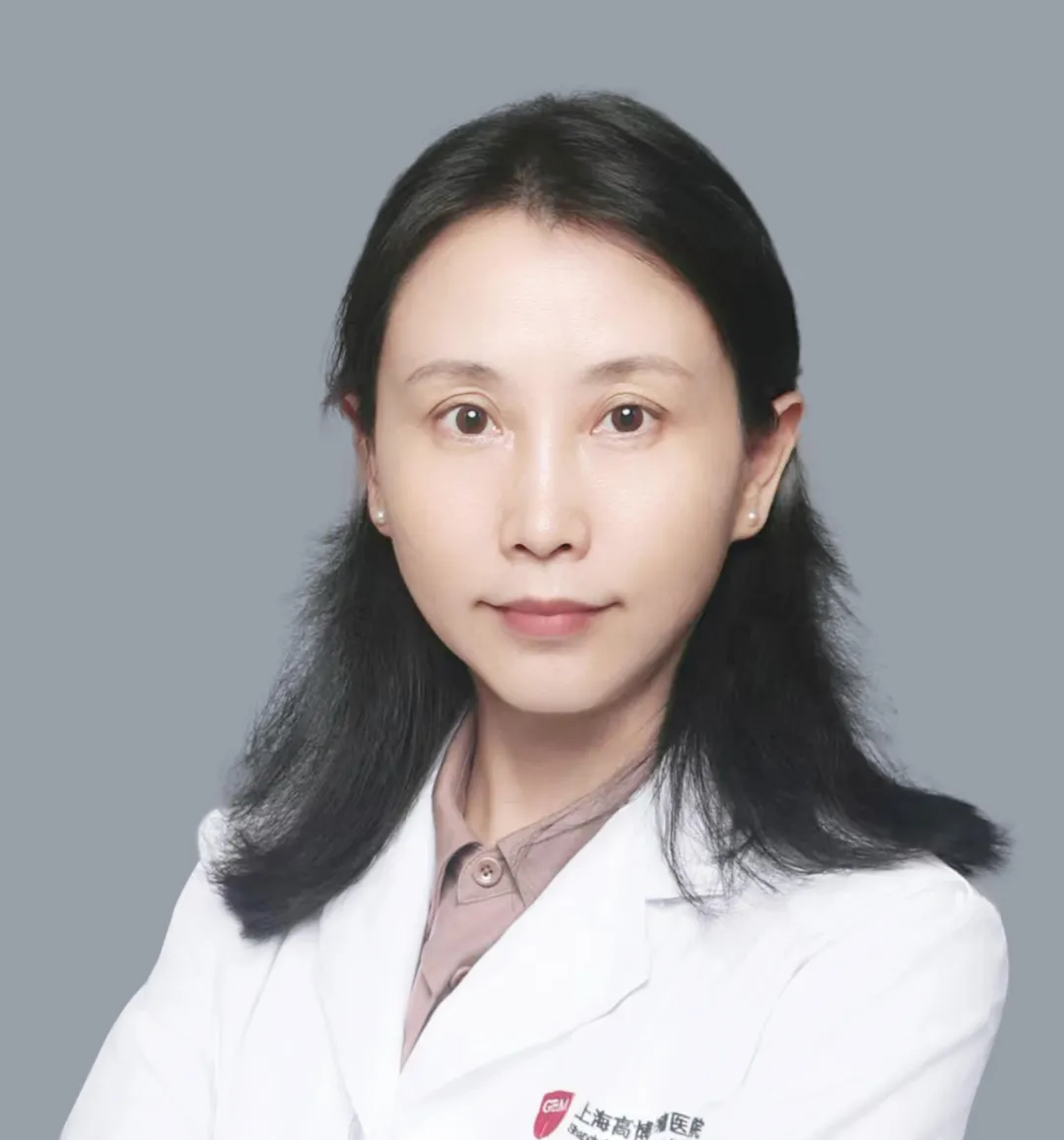
Dr. Li Shuang
Vice President for Science and Education and Director of Thoracic Oncology, Shanghai GOBROAD Cancer Hospital, China Pharmaceutical University
Clinic Schedule: Tuesday afternoon and Thursday morning — please confirm availability with MedTourChina before planning travel
Chief Physician / Master's Supervisor
Specialization: Comprehensive treatment and full-course management of malignant tumors, with a focus on combining chemotherapy, targeted therapy, immunotherapy, and radiotherapy, applied in the neoadjuvant and adjuvant treatment settings.
Professional Affiliations
- Member, Antitumor Drug Safety Management Committee, Chinese Society of Clinical Oncology (CSCO)
- Member, Brain Metastasis Group, Neuro-oncology Committee, Chinese Anti-Cancer Association (CACA)
- Member, China Radiation Therapy Oncology Group (CRTOG)
- Member, Cancer Rehabilitation and Palliative Care Committee, Shanghai Anti-Cancer Association
Learn More or Contact Us
If you or a loved one is facing a diagnosis of lung cancer with brain or bone metastases and would like to explore treatment options at Shanghai GOBROAD Cancer Hospital — including EGFR-targeted therapy, multidisciplinary treatment planning, or a second opinion from a thoracic oncology specialist — please contact us. Patient information is protected in accordance with applicable regulations.
MedTourChina Central Line
📞 Phone / WhatsApp: +86 17742026990
✉ Email: info@healthtourchina.net
🌐 Online: Request a Consultation
When contacting us, please include the diagnosis, the city where you are currently receiving care, and a brief treatment history. MedTourChina will facilitate communication with the hospital's international patient office and help arrange medical-record review, remote consultation, and visit logistics.