Innovation Outpaces the System That Proves It
Chinese original medicines are moving onto the international stage at an accelerating pace. A growing number of China-developed compounds have drawn global attention on the strength of their clinical data, and several have reshaped both Chinese and international treatment guidelines. Solid tumours remain one of the hardest frontiers in oncology and therefore one of the main targets for these new therapies.
Getting a technology from the laboratory to the patient, however, is not only a scientific problem. It requires an efficient clinical research infrastructure, multicentre collaboration and a patient network that crosses regions. That was the working premise of the 6th iHope Innovative Medicine Forum, held in Beijing on 31 October 2026.
The programme was built around innovative treatment and clinical research in solid tumours, covering cell therapy, oncolytic viruses, proton therapy, integrated nuclear medicine theranostics and photodynamic therapy, with more than 20 international experts taking part.
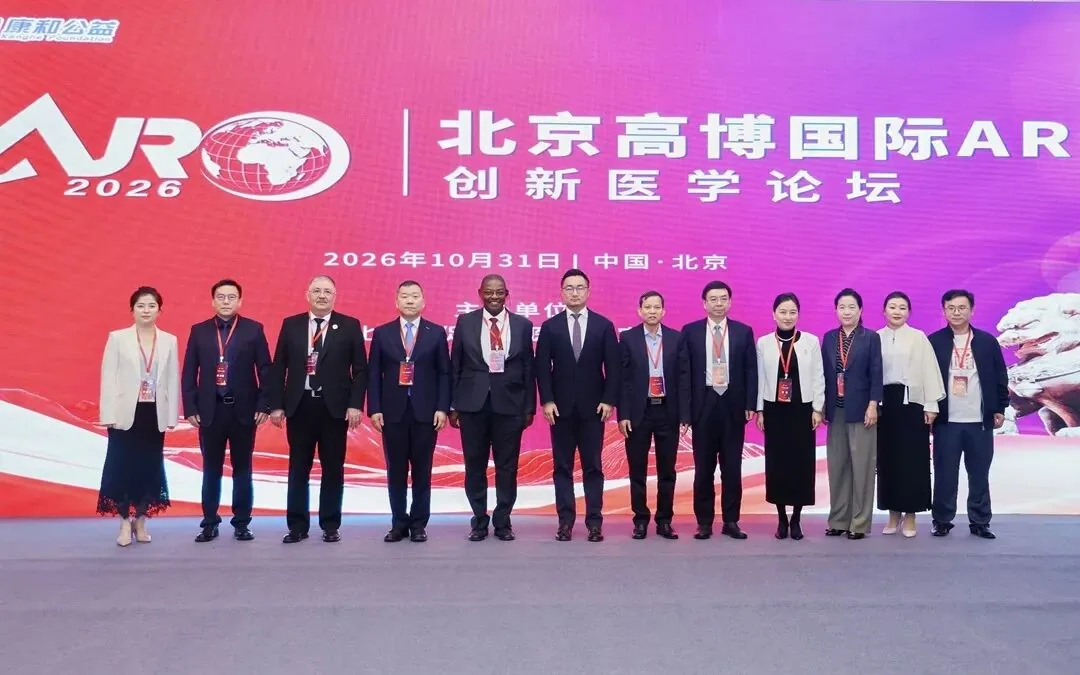
Agreements Signed, Third ARO Cohort Accredited
At the opening ceremony GOBROAD signed cooperation agreements with the China-Africa Chamber of Commerce and with the Kazakhstan Presidential Hospital. The third cohort of Global ARO Alliance partner institutions and appointed experts were accredited at the same time. The forum also hosted a young physician case challenge, the launch of the iHope New College, and the formation of the oncology youth committee of the Tongxin Gongzhu Public Welfare Foundation.
Prof. Qin Haifeng, Executive Chair of the forum and Director of the Departments of Thoracic Oncology and Tumour Immunotherapy at Beijing GOBROAD Hospital, framed the agenda around three connected stages: translating early research and innovative therapies, coordinating multicentre clinical research across borders, and training young clinical investigators. The through-line, he said, is a research-driven hospital model in which long-accumulated scientific and clinical capability is used to move from clinical innovation towards international collaboration, so that patients with solid tumours benefit from Chinese original research as early as possible.
The Global ARO Alliance: What an Academic Research Organisation Actually Solves
The launch of the Global ARO Alliance was the central agenda item. An ARO — an academic research organisation — connects sponsors, clinical investigators and regional medical experts on a single platform so that research projects can be undertaken jointly rather than in isolation.
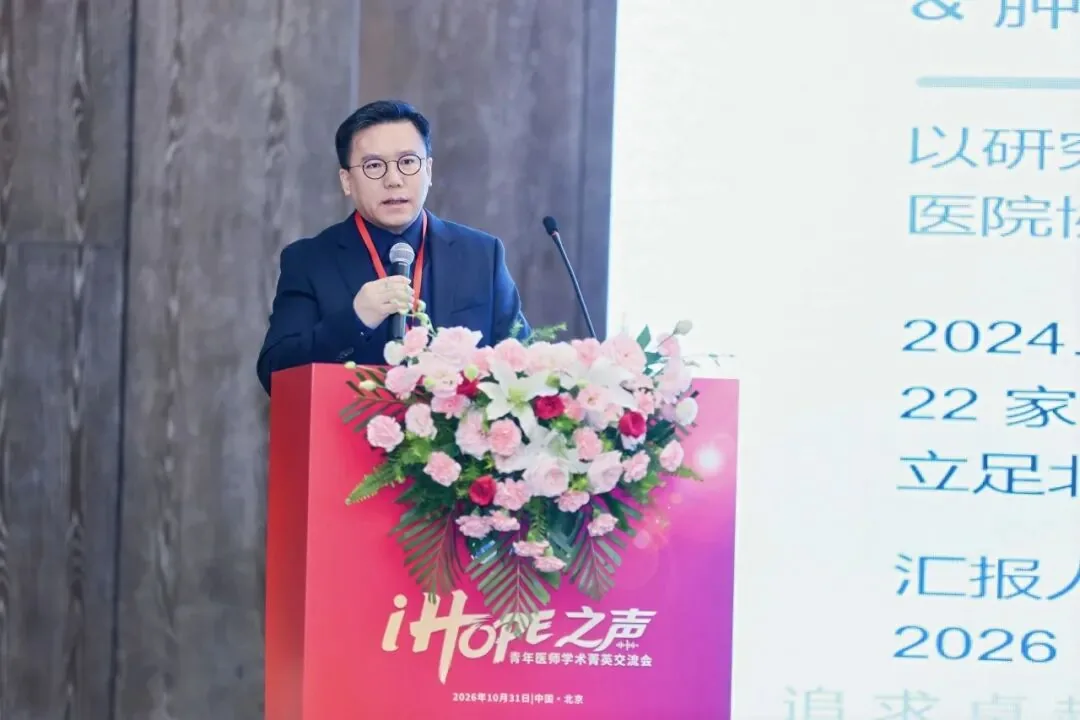
Working from GOBROAD's research-oriented international medical platform, the alliance handles mainly early-phase clinical studies and investigator-initiated trials (IITs). The shortest recorded time from project initiation to screening and enrolment is ten working days.
The model addresses a long-standing structural problem. Under the traditional arrangement, early-phase drug research concentrates in a small number of leading institutions; enrolment cycles are long, regional hospitals lack the capability and resources to take on studies, and promising projects never reach most patients. The alliance opens a participation channel for regional units, so that patients who need trial options can be screened close to home, while quality control and follow-up standards are applied uniformly by the platform to protect data integrity.
To support this, GOBROAD has established a phase I clinical trial ward, a central laboratory and an early clinical research centre, with medical and statistical support, and a complete pathway running from project initiation through ethics review to enrolment.
The Global ARO Alliance in numbers
- 36 hospitals and several hundred active oncology specialists
- More than 30 patients enrolled efficiently through the platform
- Fastest enrolment: 7 days from referral to enrolment
- Shortest project pathway: 10 working days from initiation to screening
- International collaborations with institutions in Kazakhstan, Azerbaijan and Indonesia, among others
The alliance's trajectory tracks GOBROAD's shift from regional coordination to international linkage. The first cohort launched in 2024, initially connecting oncology specialists in Inner Mongolia, Shanxi, Hebei and northeast China, and using shared information and data to help patients reach frontier research close to home.
That model was taken up quickly. The alliance has grown to 36 hospitals and several hundred active specialists, more than 30 patients have been enrolled through the platform, and the fastest case was completed in seven days.
As the domestic network matured, the alliance began to internationalise. Over the past two years clinical researchers from Central Asia, Southeast Asia and Africa have followed China's oncology research output closely, and GOBROAD has developed academic exchange and cooperation with institutions in Kazakhstan, Azerbaijan, Indonesia and elsewhere. The presence of more than 20 international experts at this forum is one measurable result of that phase.
The longer-term objective is a genuinely global network in which participants of different ethnicities and regions can be enrolled into the same multicentre study, producing evidence that covers a wider population at lower coordination cost and in a shorter cycle. Pooling clinical data from different regions under a common framework also addresses the imbalance in trial populations, reduces information bias between centres, and should improve both trial design and treatment recommendations — which is how the value of Chinese original research reaches patients globally.
Solid-Tumour Innovation Is Accelerating, but Translation Still Has to Be Earned
China's innovative drug sector has moved from follower to front-runner. Several original compounds have debuted at international congresses and, on the strength of their data, rewritten treatment guidelines at home and abroad.
Among the therapeutic platforms, cell therapy, NK therapy, CAR-NK, CAR-T and tumour-infiltrating lymphocyte (TIL) therapy have advanced markedly in haematologic disease and lymphoma and are extending into solid tumours. A landmark came in June 2026, when the CLDN18.2-directed autologous CAR-T product satri-cel (CT041) was approved by the National Medical Products Administration for CLDN18.2-positive, HER2-negative advanced gastric or gastro-oesophageal junction adenocarcinoma after at least two prior lines of therapy — the first CAR-T product approved anywhere in the world for a solid tumour.
Solid tumours differ fundamentally from haematologic malignancies: the tumour microenvironment is complex and heterogeneity is high, which has long limited the efficacy of cell therapy in this setting. As target selection and CAR engineering improve, high-frequency targets such as CLDN18.2 have been validated and solid-tumour cell therapy has entered a faster phase.
Other platforms are complementary rather than competing. Oncolytic viruses activate local antitumour immune responses; integrated nuclear medicine theranostics links diagnosis directly to treatment; proton therapy exploits the physical dose distribution to spare surrounding tissue. Together they widen the options for patients with advanced solid tumours.
Prof. Qin Haifeng's own team has run clinical studies of investigational agents and cell therapies, with good data from T-cell therapy and CAR-T programmes. The next step is to compress the interval between trial stages so that results reach practice sooner, while using the ARO platform to set up global multicentre collaboration in oncolytic viruses, radioligand therapy for lung cancer and gut microbiome-related therapies.
He was candid about the remaining obstacle: the gap between laboratory proof and the patient's bedside, which a research-driven hospital is specifically positioned to bridge. A clinician typically needs a long time to become a principal investigator; GOBROAD's systematic collaboration model is designed to let investigators concentrate on the work itself, with ethics review opened on application and recruitment, support and quality control handled across departments.
That capability rests on institutional depth. GOBROAD Medical Group was founded in 2017 as an early exponent of the research-driven hospital model in China, and now operates seven hospitals in Beijing, Shanghai and Guangzhou with close to 1500 beds, focused on solid tumours, haematologic disease and brain science. Beijing GOBROAD Hospital takes complex and critical care, clinical research and industrial translation as its strategic goals, building a closed loop from clinical observation to basic research, industrial translation and clinical application, with a deliberately small outpatient footprint and a large research footprint. Prof. Qin describes the model less as a conventional hospital than as an incubator: attracting principal investigators, deepening project cooperation, attracting sponsors and then attracting more investigators, so that young physicians develop into better researchers and companies reach investigators faster.
Training the Next Generation: Research Questions Start at the Bedside
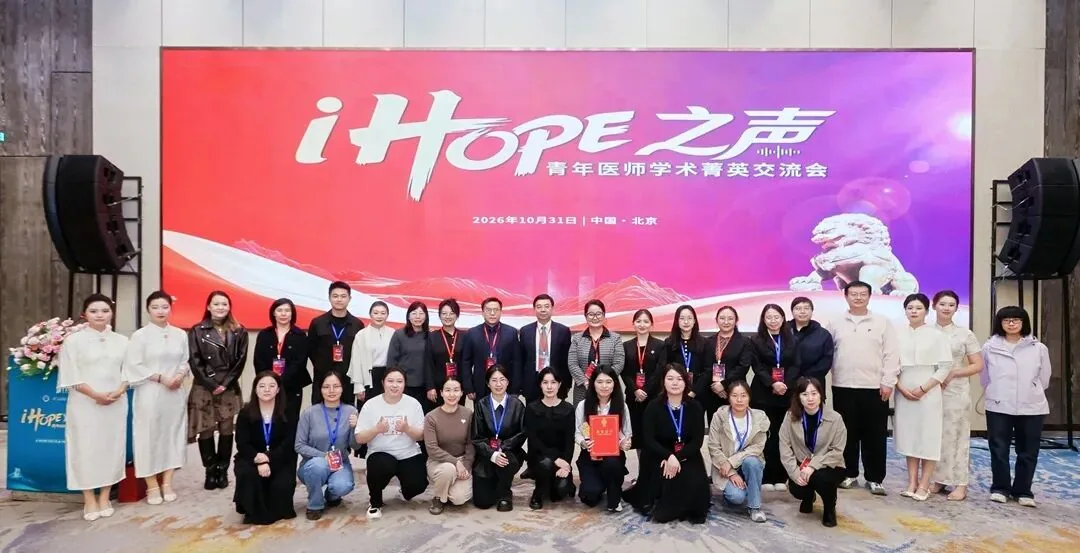
Beyond the scientific sessions and the international agreements, the youth programme drew substantial attention. Qin Lili, Executive Chair of the youth session and a physician in the Department of Thoracic Oncology at Beijing GOBROAD Hospital, explained that the young physician case challenge used real clinical cases and required participants to build standardised, individualised plans grounded in CSCO and NCCN guidelines, published evidence and the latest trial results — an exercise in clinical reasoning and evidence-based decision making.
The challenge is one component of a broader training system built on the iHope medical platform, which has focused for seven years on one-stop development for young physicians. The platform now comprises 12 colleges, with Henan and Hunan colleges added at this forum, alongside the newly inaugurated oncology youth committee of the Tongxin Gongzhu Public Welfare Foundation.
The academic programme is continuous rather than episodic. In addition to the on-site case challenge, iHope runs the "Baota Appointment" interview salon series, whose first session convened Chinese small-cell lung cancer specialists to discuss real-world use of tarlatamab and the management of its adverse effects. It also holds a regular online adverse-event case exchange, now in its sixth session, in which more than 30 physicians from 12 colleges review real cases and compare management approaches. A case-based book series on drug adverse reactions is planned with the Science and Technology Press, intended to draw young physicians further into study design and real-world research.
In Qin Lili's view, frontline clinical work is the young physician's specific research advantage. Day-to-day ward management surfaces questions that current guidelines cannot fully answer, and those questions are the most natural starting point for clinical research. Two patients with the same EGFR mutation, for example, may derive long-term benefit from targeted therapy or develop resistance quickly; the biomarker that explains the difference is a worthwhile research target. How to sequence treatment for patients with rare targets after first- and second-line resistance is another.
On that basis, she hopes the youth collaboration network built through iHope will encourage more young physicians to study domestic case series, accumulate clinical data specific to Chinese populations, and generate the local evidence that individualised oncology in China still needs.
Learn More or Contact Us
If you would like to know more about the diagnostic pathways, treatment options or clinical studies described in this article, our international patient team can help you understand what is available at GOBROAD hospitals. Your personal information is protected in accordance with applicable regulations.