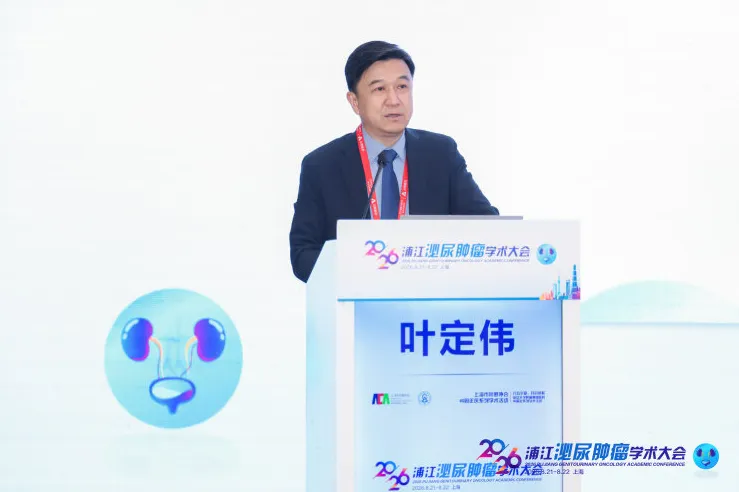
About Professor Ye Dingwei
Professor Ye Dingwei is Chief Physician, Professor, and Doctoral Supervisor at the Department of Urology of Fudan University Shanghai Cancer Center (FUSCC), and Chief Expert of the Urologic Oncology Multidisciplinary Team (MDT). He also serves as an Invited Expert at Shanghai GOBROAD Cancer Hospital. A leading authority in urologic oncology in China, Professor Ye has led the FUSCC urologic oncology team in advancing precision diagnosis, minimally invasive surgery, and multidisciplinary integrated care for urothelial carcinoma and renal cell carcinoma.
The 2026 Pujiang Conference: Precision Integration, Innovation for the Future
The 2026 Pujiang Urological Oncology Academic Conference was held successfully in Shanghai from August 21 to 22, 2026. With the theme "Precision Integration, Innovation for the Future", the conference gathered authoritative multidisciplinary experts in urologic oncology across China. The program focused on new patterns of precision therapy for renal cell carcinoma, innovative treatment models for urothelial carcinoma, complex-case multidisciplinary decision-making, and frontier translational research.
As the conference president, Professor Ye Dingwei delivered an in-depth interview on the academic highlights and discipline-building philosophy of the conference, the clinical practice of whole-course precision care for urothelial carcinoma, and how the "FUSCC model" can be disseminated and implemented at all levels of hospital care.
Three Academic Dimensions of the Conference
Professor Ye summarized the academic layout of this year's conference into three dimensions.
1. Precision-Oriented Care
The conference explored core pain points and difficult problems in the diagnosis and treatment of urothelial carcinoma and renal cell carcinoma. Experts reached a strong consensus that precision and individualized therapy are the inevitable directions to break through current efficacy bottlenecks. This aligns with the broader trend in urologic oncology: shifting from traditional disease-staging management to precise stratification based on patient characteristics and tumor biology.
2. Multidisciplinary Integration
The conference invited not only urologists but also senior scholars from medical oncology, radiation oncology, radiology, pathology, and other disciplines. Professor Ye emphasized that future urologic oncology care should be based on precision stratification, use multidisciplinary collaboration as the pathway, and aim for whole-course patient benefit, connecting the entire diagnosis-and-treatment chain.
3. Whole-Course Management
Discussions covered the full disease trajectory, from early precision screening and diagnosis, through mid-stage precision surgery, to locally advanced and advanced-stage comprehensive therapy and clinical trial exploration. The program also highlighted new targets, new drug development, and the importance of long-term follow-up and rehabilitation management for patients.
"Precision Integration represents the future direction of urologic oncology diagnosis and treatment in China," said Professor Ye. "Innovation for the Future carries our continuing mission to explore. Through clinical research, technological innovation, and interdisciplinary collaboration, we aim to advance the standard of urologic oncology care nationwide."
From Evidence to Innovation: FUSCC Whole-Course Precision Practice for Urothelial Carcinoma
Professor Ye's presentation, From Evidence to Innovation: Whole-Course Precision Diagnosis and Treatment of Urothelial Carcinoma — The FUSCC Practice, addressed two core layers: whole-course coverage and the transition from evidence to innovation.
Evidence Is the Foundation; Innovation Is the Direction
Following guidelines and evidence-based medicine can produce stable cure rates and survival, but to break through the current efficacy ceiling, clinical exploration and research innovation are essential, Professor Ye noted. Evidence provides the foundation; innovation points the way. The combination of both is what drives continuous advancement.
Early Screening and Diagnosis
For decades, urothelial carcinoma diagnosis has relied mainly on cystoscopy and urine cytology, which are invasive and have limited sensitivity for some subtypes. To meet this long-unmet clinical need, the FUSCC team has worked on molecular testing and liquid biopsy technologies, developing novel biomarkers. Related diagnostic products have successively obtained medical-device registration certificates, potentially reshaping the clinical landscape of early screening and diagnosis for urothelial carcinoma.
Surgical Treatment and Perioperative Strategy
Professor Ye stressed that urologists should not abandon refined surgical technique, but surgical thinking must shift from a purely surgical mindset to an oncological mindset. The goal is no longer simply to perform a good operation, but to improve overall cure rates and survival. Based on this philosophy, the team has actively applied narrow-band imaging (NBI) and blue-light cystoscopy in surgery, while vigorously promoting transurethral resection of bladder tumor (TURBT) re-resection to reduce postoperative recurrence risk.
About half of patients with muscle-invasive bladder cancer face metastatic or recurrent risk after surgery, with micrometastases being an important cause of distant metastasis. To address this, the team has explored perioperative systemic therapy, moving from traditional platinum-based chemotherapy toward innovative antibody-drug conjugate (ADC) plus immunotherapy combinations. Relevant research results were presented as oral reports at the 2026 ASCO Genitourinary Cancers Symposium (ASCO GU).
Bladder-Preservation Multidisciplinary Protocols
Relying on multidisciplinary teamwork, FUSCC has accumulated extensive clinical experience in bladder-preservation comprehensive treatment, offering organ-sparing integrated treatment options for patients who meet selection criteria.
Advanced-Stage Whole-Course Therapy
For advanced disease, FUSCC has laid out a large number of clinical trials across first-line, second-line, and later-line settings, systematically exploring multi-target agents and novel combination regimens to expand treatment boundaries and help patients achieve longer survival and better quality of life.
Four-Plank Discipline-Building Model
Taking the FUSCC urologic oncology team's practice as an example, Professor Ye described a discipline-building model anchored by the Shanghai Urological Cancer Institute, with four core team planks. This model can be promoted not only for urothelial carcinoma but also extended to renal cell carcinoma and other urologic tumors.
1. Urologic Surgery Team
According to statistics from the Shanghai Shenkang Hospital Development Center, FUSCC's bladder cancer surgical volume has ranked first in Shanghai for many years, accounting for one-third of the city's total bladder cancer surgical volume. However, Professor Ye noted that significant unmet clinical needs remain.
2. Multidisciplinary Team (MDT)
Single-modality surgery has inherent limitations. Perioperative management and long-term survival improvement require coordinated efforts from medical oncology, radiation oncology, pathology, radiology, and other disciplines. The MDT team is the core vehicle for practicing the concept of precision integration and improving comprehensive treatment outcomes.
3. Research and Translational Research Team
To break existing treatment bottlenecks, answers must come from frontier basic research. The team relies on dedicated laboratories and researchers to conduct in-depth exploration of novel tumor markers, disease mechanisms, and drug-resistance mechanisms, providing forward-looking technical support for breakthroughs in urothelial carcinoma and renal cell carcinoma.
4. Clinical Trials Team
Urothelial carcinoma has many actionable targets. The FUSCC team has carried out a series of clinical trials targeting more than ten core targets, covering the full disease spectrum from non-muscle-invasive, muscle-invasive, to advanced bladder cancer, and exploring immunotherapy, ADC drugs, and various novel targeted agents.
Through the synergistic linkage of these four planks, the team has achieved deep integration of disciplinary resources and continuous improvement in treatment efficacy. Through the Pujiang conference academic exchange platform, this mature diagnosis-and-treatment system and discipline-building experience will continue to be disseminated to hospitals at all levels, promoting Chinese urologic oncology toward more precise, integrated, and standardized care.
Conclusion
The 2026 Pujiang Urological Oncology Academic Conference, themed "Precision Integration, Innovation for the Future," focused on clinical pain points and discipline-building challenges in urologic oncology. It clarified the industry development trend of precision stratification, multidisciplinary collaboration, and whole-course management. The conference shared substantial, mature, and feasible clinical experience across early screening and diagnosis, perioperative optimization, and advanced whole-course treatment for urothelial carcinoma. The integrated discipline-building model combining surgical technology, MDT comprehensive care, translational research, and clinical trials provides a complete practical template for standardized diagnosis and treatment of urologic tumors and an important reference for optimizing care of renal cell carcinoma and other tumors.