Why PTEN Deficiency Changes the Trajectory of mHSPC
Phosphatase and tensin homologue (PTEN) is one of the most frequently lost tumour-suppressor genes in prostate cancer. Its normal function is to brake the PI3K-AKT pathway, so when PTEN function is lost the pathway runs unchecked, driving tumour progression, metastasis and treatment resistance.
That biology has a direct clinical consequence. When the androgen receptor (AR) pathway is blocked by androgen deprivation therapy (ADT) plus an androgen receptor pathway inhibitor (ARPI), PTEN-deficient tumour cells can keep growing through alternative PI3K-AKT signalling. In practice these patients may show an inadequate or short-lived PSA response, earlier radiological progression, new bone or visceral metastases, faster transition to metastatic castration-resistant disease (mCRPC) and a narrower window for later treatment.
The phase III CAPItello-281 trial tested the logical counter-move: block both pathways at once. Adding the AKT inhibitor capivasertib to abiraterone and ADT significantly prolonged radiological progression-free survival (rPFS) in PTEN-deficient metastatic hormone-sensitive prostate cancer (mHSPC). At the 2026 European Society for Medical Oncology (ESMO) Congress, the trial reported updated overall survival (OS) data, selected for presentation as a late-breaking abstract.
Two Unmet Needs in PTEN-Deficient Disease
Oncology Frontier: mHSPC has entered the era of precision therapy. In your clinical experience, what needs remain unmet for patients whose tumours carry PTEN loss?
Prof. Ye Dingwei: For a long time, treatment decisions in mHSPC have been based on tumour burden, the site of metastasis and the timing of metastatic spread. Those features support an initial risk stratification, but they describe the external behaviour of the disease more than its internal molecular biology. ADT combined with a novel endocrine agent, plus chemotherapy where indicated, has clearly improved overall outcomes, yet the benefit still varies considerably between patients.
That gap is exactly what molecular profiling is meant to close. PTEN loss defines a subgroup whose tumours retain a growth signal after AR blockade, and that subgroup has two specific problems. First, the depth and the duration of disease control achieved with current standard treatment may be limited, so resistance and progression can arrive earlier. Second, these patients have to be identified at the point of diagnosis, not after several lines of therapy, if the molecular information is going to shape the treatment decision at all.
Both problems point in the same direction: PTEN testing needs to be taken more seriously and moved forward to the initial diagnosis and first-line decision. Detecting and interpreting PTEN loss in a timely, standardised way is what allows clinicians to choose treatment intensity, evaluate targeted options and plan follow-up. Early testing, accurate interpretation and individualised treatment only create value when they are used together.
From rPFS to OS: What the 2026 Update Shows
Oncology Frontier: CAPItello-281 presented updated OS results at this ESMO Congress. How do you read the clinical significance of that result, and how will the step from rPFS benefit to OS benefit change practice?
Prof. Ye Dingwei: Because PTEN loss releases the brake on PI3K-AKT-mTOR signalling, it reduces the tumour's dependence on the AR pathway. That is why simultaneous blockade of AR and AKT produces a synergistic effect rather than simply adding two drugs together.
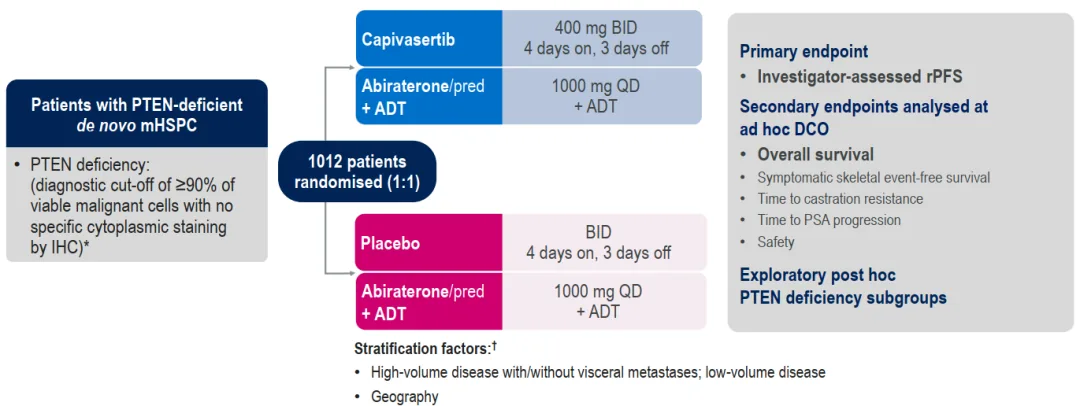
CAPItello-281 is an international, multicentre, randomised, double-blind, placebo-controlled phase III trial. It enrolled 1012 patients aged 18 or older with newly diagnosed mHSPC, PTEN deficiency confirmed by immunohistochemistry (no specific cytoplasmic staining in at least 90% of tumour cells) and an ECOG performance status of 0 to 1. Patients were randomised 1:1 to capivasertib plus abiraterone or placebo plus abiraterone, with both arms receiving prednisone and ADT. The primary endpoint was investigator-assessed rPFS and the key secondary endpoint was OS.
CAPItello-281 at a glance
- Population: 1012 patients with PTEN-deficient de novo mHSPC (IHC cut-off: ≥90% of malignant cells without specific cytoplasmic staining)
- Design: capivasertib 400 mg (4 days on, 3 days off) plus abiraterone 1000 mg daily and ADT versus placebo plus abiraterone and ADT, randomised 1:1
- 2025 ESMO rPFS: 33.2 vs 25.7 months, HR 0.81 (95% CI 0.66-0.98), P=0.034; OS immature but trending positive (HR 0.90)
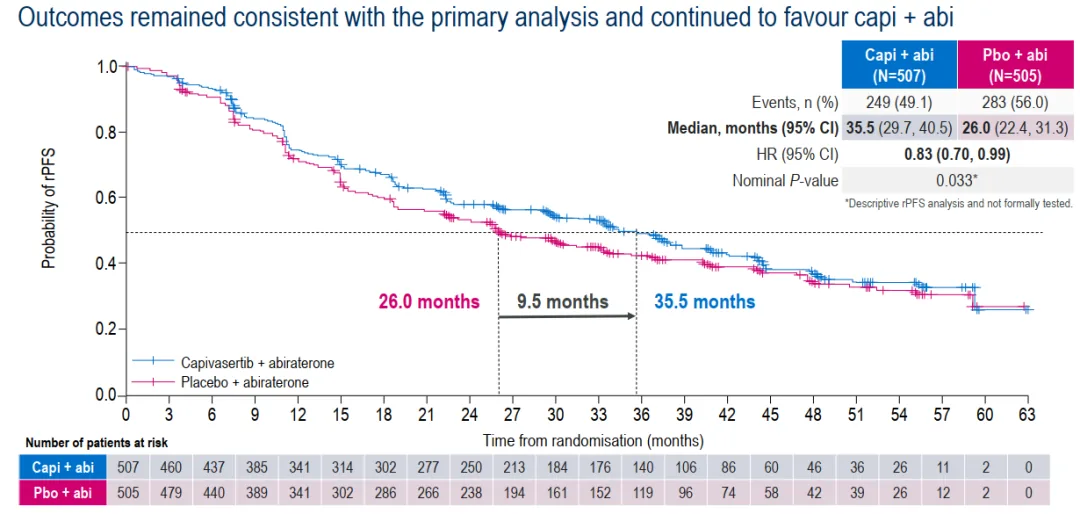
- 2026 ESMO rPFS update: 35.5 vs 26.0 months, HR 0.83, nominal P=0.033
- 2026 ESMO OS: 57.4 vs 46.5 months, HR 0.82 (95% CI 0.68-0.99), P=0.044
- Exposure-response: the higher the PTEN-deficiency cut-off applied, the greater the OS benefit observed
The 2025 analysis already showed a statistically significant rPFS improvement, with OS still immature but pointing in a favourable direction. At the 2026 congress the data matured in both directions at once: rPFS improved further to a 9.5-month gain over the control arm, and OS became statistically significant, with median OS reaching 57.4 months against 46.5 months.
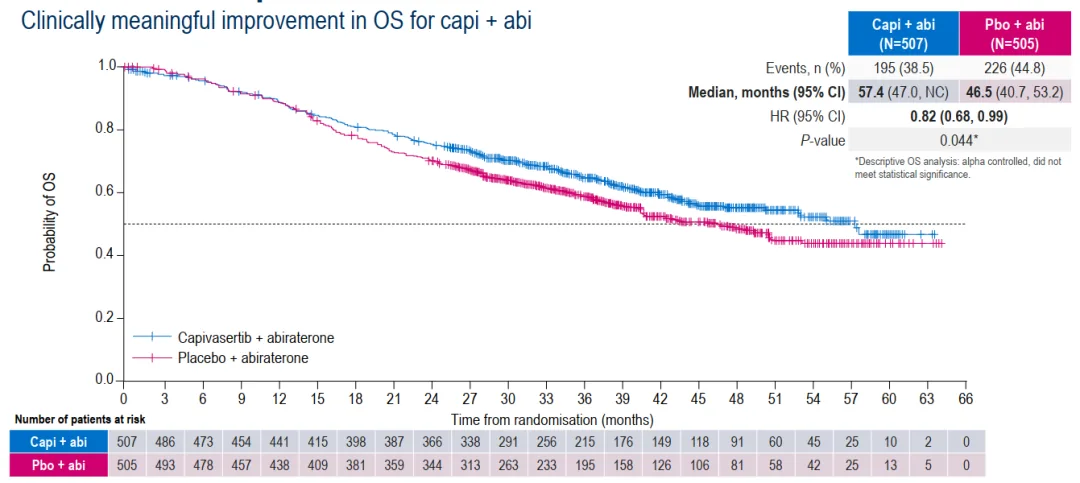
An rPFS benefit indicates that the disease is being controlled. An OS benefit indicates that the strategy actually changes how long patients live, which is the outcome that matters most to them. Read together, the evidence upgrade carries three implications.
First, PTEN loss is now a treatment-selection biomarker, not only a prognostic one. It identifies the population most likely to gain from AKT inhibition, which means management of PTEN-deficient disease should move beyond risk stratification towards molecularly guided intervention.
Second, mHSPC treatment is shifting from a one-size-fits-all model to molecularly stratified intensification. Decisions based on disease burden, metastatic pattern and clinical risk are being supplemented by decisions based on tumour genotype, and the trial provides both the confidence and the evidence base for further precision studies in the hormone-sensitive setting.
Third, the case for testing earlier has become much stronger. If a molecular result is going to influence the first-line decision, the test has to be available at the first-line decision. Moving biomarker testing into earlier disease stages allows high-risk patients to be identified sooner and their whole management pathway to be planned around that information.
What Stands Between the Evidence and Routine Practice in China
Oncology Frontier: The positive OS result underlines the clinical value of PTEN. In Chinese practice, what practical obstacles remain before PTEN testing is widely implemented, and what needs to be done?
Prof. Ye Dingwei: Precision treatment starts with testing. Immunohistochemistry (IHC) detects PTEN protein expression directly, and it is quick, inexpensive, widely available and therefore well suited to routine practice. CAPItello-281 provides solid grounds for using IHC-detected PTEN deficiency to guide clinical decisions, and IHC is already the standard method recommended in international and Chinese guidelines.
Three obstacles still limit how widely PTEN IHC is actually used. The first is clinical awareness. For years, without a targeted option to act on the result, PTEN testing received limited attention; as the evidence accumulates, clinician education has to make clear that PTEN status informs both prognosis and the treatment decision.
The second is standardisation. Assessment tools and scoring systems differ, so the definition of PTEN deficiency has not been uniform across trials. Selecting patients accurately requires agreed methodology, agreed interpretation cut-offs and a regulated testing workflow.
The third is how the result is used. A test is only valuable if it changes a decision, and that depends on close two-way communication between the clinical and pathology teams, so that the pathology report is read together with the specific clinical context. Access also matters: the availability of testing resources, patient acceptance and the accumulation of Chinese real-world data all influence how evenly PTEN testing can be adopted across regions.
What CAPItello-281 ultimately establishes is that PTEN is a key biomarker in prostate cancer with a therapeutic consequence attached. Turning that into better outcomes requires a standardised testing system, a working clinical-pathology partnership and a clear route from the result to the treatment plan — at which point PTEN testing stops being interesting molecular information and becomes a clinical tool that guides therapy.
References
- Fizazi K, et al. 2025 ESMO Congress. Abstract 2383O.
- Fizazi K, et al. 2026 ESMO Congress. Late-breaking abstract LBA56.
- Kobayashi K, et al. Clin Genitourin Cancer. 2025;23(6):102437.
- Alaimo D, et al. Crit Rev Oncol Hematol. 2026;226:105494.
- Kisiel F, et al. Cancers (Basel). 2025;17(17):2862.
- Jamaspishvili T, et al. Nat Rev Urol. 2018;15(4):222-234.
- Esteban-Villarrubia J, et al. Immuno. 2024;4(4):444-460.
- NCCN Clinical Practice Guidelines in Oncology: Prostate Cancer. 2026.V7.
- CSCO Guidelines for the Diagnosis and Treatment of Prostate Cancer. 2026 edition.
About the Featured Expert
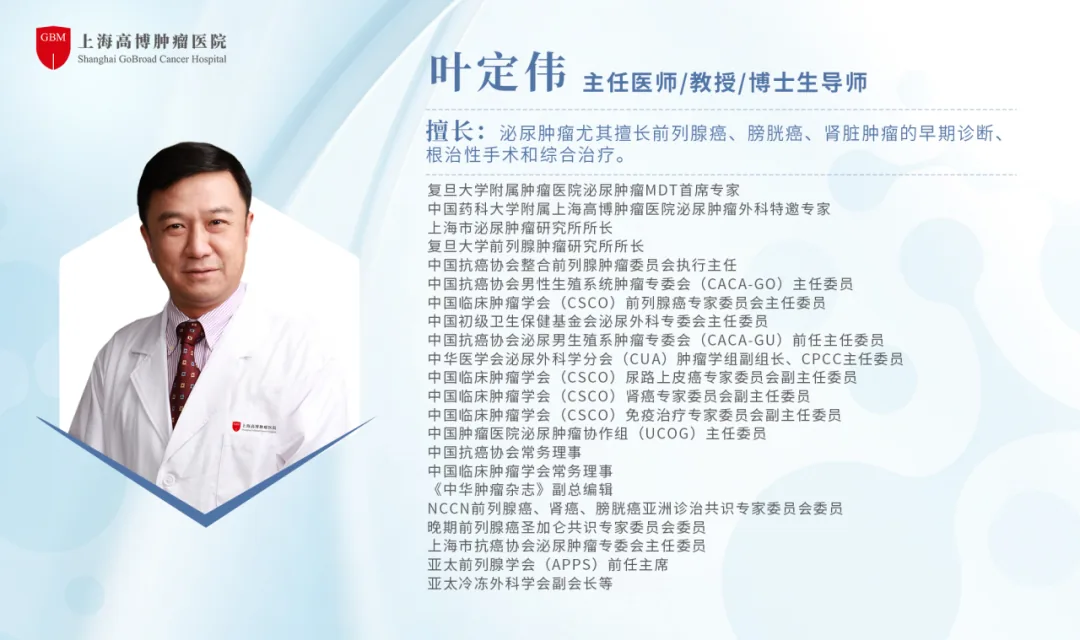
Prof. Ye Dingwei (叶定伟)
Chief Expert, Urologic Oncology MDT, Fudan University Shanghai Cancer Center
Distinguished Specialist in Urologic Oncology Surgery, China Pharmaceutical University Affiliated Shanghai GOBROAD Cancer Hospital
Chief Physician / Professor / Doctoral Supervisor
Specialisation: Early diagnosis, radical surgery and integrated management of urologic tumours, with particular expertise in prostate, bladder and kidney cancer.
Academic appointments include Director of the Shanghai Institute of Urologic Oncology, Director of the Fudan University Prostate Cancer Institute, Chair of the Integrated Prostate Cancer Committee of the China Anti-Cancer Association, Chair of the CACA-GO Committee, Chair of the Prostate Cancer Committee of the Chinese Society of Clinical Oncology (CSCO) and past President of the Asia-Pacific Society of Uro-Oncology (APSU). He serves on the expert panels for the NCCN guidelines on prostate, kidney and bladder cancer and on the Asia-Pacific prostate cancer consensus.
Learn More or Contact Us
If you would like to know more about the diagnostic pathways, treatment options or clinical studies described in this article, our international patient team can help you understand what is available at GOBROAD hospitals. Your personal information is protected in accordance with applicable regulations.