Editor's note: The 2026 ESMO Congress brought together several important advances in urothelial carcinoma, with sustained interest in Nectin-4 targeted therapy and 34 studies centred on enfortumab vedotin.
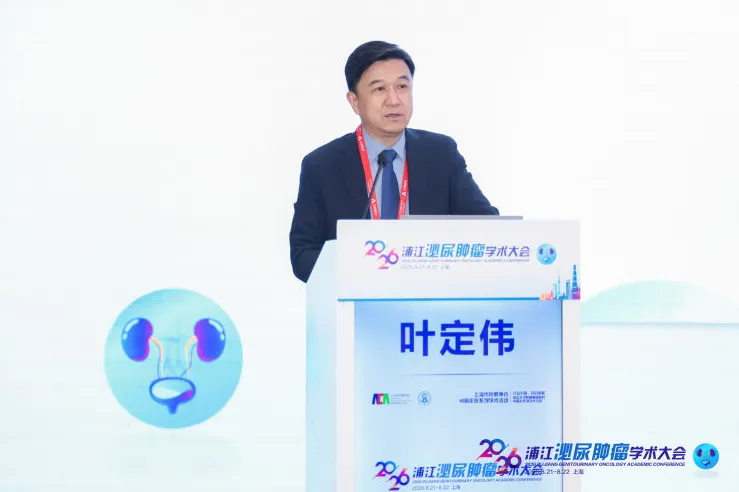
For a long time, the core approach to muscle-invasive bladder cancer (MIBC) has been neoadjuvant chemotherapy followed by radical surgery, and there is still considerable room to explore in the perioperative systemic setting. The breakthrough results of EV-303 and EV-304 go beyond significant improvements in event-free survival, overall survival and pathological complete response: they explore an integrated perioperative pathway in which the same combination runs through neoadjuvant treatment, radical surgery and adjuvant treatment. The populations studied include patients eligible for cisplatin and those ineligible for or refusing it. Both trials have been published in the New England Journal of Medicine, and the regimens have received phased approval from the US Food and Drug Administration. Prof. Ye Dingwei of Fudan University Shanghai Cancer Center and Shanghai GOBROAD Cancer Hospital affiliated to China Pharmaceutical University was invited to interpret the clinical value and future directions of this model in the light of the latest ESMO 2026 evidence.
From Staged Intervention to Continuous Care: The Perioperative Model Keeps Evolving
MIBC care has long been organised as three separate decisions — before surgery, during surgery and after surgery. Neoadjuvant cisplatin-based chemotherapy aimed at downstaging, surgery for local control, and the decision on adjuvant treatment were made at fresh assessment points. This structure leaves two clear gaps: the risk of recurrence in high-risk patients after surgery is not covered by earlier treatment strategies, and for patients ineligible for or refusing cisplatin, the preoperative stage has long lacked options validated by randomised trials.
Integrated perioperative care brings deep preoperative response, timely surgery and postoperative risk intervention into a single framework, and the perioperative design of the enfortumab vedotin combination follows exactly this logic. The focus extends from one treatment step to the entire perioperative period, with the aim of deeper tumour response and more durable disease control.
From Deep Response to Long-Term Benefit: EV-303 and EV-304
In patients eligible for cisplatin, the phase III EV-304 trial compared perioperative enfortumab vedotin plus pembrolizumab with gemcitabine plus cisplatin neoadjuvant chemotherapy followed by surgery. At a median follow-up of 33.6 months, the 2-year event-free survival rate in the combination arm was 79.4%, with a 47% reduction in the risk of progression, recurrence or death. The pathological complete response rate rose from 32.5% to 55.8%, and an overall survival benefit was also observed.
In patients ineligible for or refusing cisplatin, the phase III EV-303 trial extended the model further. Compared with radical cystectomy alone, perioperative enfortumab vedotin plus pembrolizumab raised the 2-year event-free survival rate from 39.4% to 74.7% and the pathological complete response rate from 8.6% to 57.1%, with an overall survival benefit as well.
Together, the two phase III trials cover different cisplatin-eligibility populations. Both show that an enfortumab vedotin-based combination not only achieves deeper pathological response but extends benefit to long-term outcomes such as event-free and overall survival, moving MIBC treatment from a single stage towards an integrated pathway linking preoperative therapy, surgery and postoperative treatment.
The intention-to-treat analysis of EV-303 presented at ESMO 2026 adds to this evidence, with a 2-year event-free survival rate of 75.8% and a pathological complete response rate of 58.8% in the enfortumab vedotin combination arm.
From Efficacy to Whole-Course Benefit: A Multidimensional Evaluation
Whether integrated perioperative treatment is feasible depends first on whether preoperative therapy can be connected to surgery. In EV-303, radical cystectomy was performed in 87.6% of the combination arm and 89.7% of the control arm; in EV-304 the corresponding figures were 86.7% and 89.6%. Similar surgery rates in both trials suggest that the strategy can be aligned with radical surgery. Feasibility does not mean zero risk, however: in EV-304, 3.2% of patients could not undergo surgery because of adverse events, and about 7% had surgery delayed by more than eight weeks after the last neoadjuvant treatment. Skin reactions, peripheral neuropathy and hyperglycaemia are key adverse events to manage with enfortumab vedotin, and immune-related adverse events also need continuing assessment. Risk assessment before treatment, dynamic monitoring during treatment and timely intervention are what turn on-schedule surgery from a trial result into clinical reality.
A ctDNA analysis of EV-304 presented at this year's ESMO Congress showed a ctDNA clearance rate of 82.1% in the combination arm versus 66.7% with gemcitabine plus cisplatin. Regardless of ctDNA status before neoadjuvant treatment or after surgery, patients treated with the enfortumab vedotin combination had better event-free survival, and those who achieved clearance had the best prognosis. These findings suggest that ctDNA may help researchers understand the relationship between molecular residual disease and treatment outcomes, but the evidence remains exploratory: whether it can guide perioperative decisions and patient selection still needs further validation.
A health-related quality of life analysis from EV-304 found no clinically meaningful differences between the arms at week 42 after surgery in global health status, physical functioning, role functioning, or bowel, urinary and sexual functioning. Sexual function scores declined in both groups, consistent with the impact of radical cystectomy itself.
Perioperative treatment should therefore be judged not only by preoperative tumour shrinkage or surgical pathology, but by disease control, survival outcomes, molecular markers and patients' longer-term quality of life. As more follow-up data and patient-reported outcomes accumulate, clinicians will have fuller evidence for understanding who benefits and for refining treatment decisions.
Expanding Evidence: VOLGA and Bladder Preservation
As evidence from EV-303 and EV-304 accumulates, the perioperative evidence base for enfortumab vedotin in MIBC continues to grow. The phase III VOLGA trial presented at ESMO 2026 extended this exploration: in patients ineligible for or refusing cisplatin, enfortumab vedotin plus durvalumab significantly improved event-free and overall survival, further confirming the clinical value of enfortumab vedotin in the perioperative setting.
VOLGA used a different immunotherapy partner and treatment schedule from the enfortumab vedotin plus pembrolizumab regimen running through the entire perioperative period in EV-303 and EV-304. Different phase III designs continue to enrich the evidence base and broaden the exploration of enfortumab vedotin in MIBC.
When preoperative systemic therapy produces a sufficiently deep response, a natural question follows: does every patient who achieves a deep response still need radical cystectomy? Radical cystectomy remains the core treatment for MIBC, but it can have long-term effects on urinary function, body image and quality of life. Exploring bladder-preserving strategies for suitable patients, while maintaining tumour control, is another important direction. Bladder preservation is not a new idea: the classic trimodal approach combines maximal transurethral resection of the bladder tumour with radiotherapy and concurrent chemotherapy. Alongside this, studies are exploring avoidance of radical cystectomy after systemic treatment, based on strict assessment and close monitoring. The designs of EV-209 and EV-309 presented at ESMO 2026 reflect this direction. EV-209 is a single-arm phase II study assessing the bladder-preserving potential of an enfortumab vedotin-based combination, with primary endpoints including the clinical complete response rate in the whole population and 2-year bladder-preserving event-free survival among patients achieving a clinical complete response. EV-309 is a randomised phase III study comparing an enfortumab vedotin-based combination with chemoradiotherapy, further evaluating bladder-preserving event-free and overall survival.
Expert Perspective: From Integrated Perioperative Treatment to Whole-Course Management
From a surgical and whole-course management perspective, the significance of EV-303 and EV-304 lies not only in adding a perioperative option, but in the way an enfortumab vedotin-based combination links deep preoperative response, radical surgery, continuing postoperative treatment and long-term outcomes into one complete pathway. Clinical attention moves from how to treat a particular stage to how to coordinate the whole pathway around the patient's long-term benefit. That requires deeper preoperative response to support standard surgery, postoperative treatment to consolidate durable control, and careful management of adverse effects, surgical conditions and recovery so that treatment and surgery proceed in an orderly way. Dimensions such as ctDNA and health-related quality of life extend evaluation beyond tumour response to molecular risk and the patient's overall treatment experience. Perioperative treatment is moving from successive stages towards whole-course management aimed at long-term benefit.
Summary
From the positive results of EV-304 in cisplatin-eligible patients, to the perioperative evidence EV-303 provides for those ineligible for or refusing cisplatin, and on to continuing exploration of ctDNA, quality of life and bladder preservation, research into enfortumab vedotin-based treatment keeps strengthening the evidence base for comprehensive MIBC care. The key issue in perioperative treatment is not only which systemic therapy to choose, but how to connect preoperative treatment, radical surgery and adjuvant therapy, and how to build an individualised plan around the patient's disease characteristics, tolerance and quality-of-life needs. As longer follow-up and further results become available, the clinical place of integrated perioperative treatment and bladder-preserving strategies will continue to be refined.
About the Featured Expert
Prof. Ye Dingwei is a senior urological oncologist at Fudan University Shanghai Cancer Center and a specially invited expert at Shanghai GOBROAD Cancer Hospital affiliated to China Pharmaceutical University. His work focuses on precision diagnosis and treatment of prostate and urothelial cancers, including perioperative strategies for muscle-invasive bladder cancer and PTEN-guided management of advanced prostate cancer.
References
- Galsky MD, Valderrama BP, Maruzzo M, et al. Enfortumab Vedotin and Pembrolizumab in Cisplatin-Eligible Bladder Cancer. N Engl J Med. 2026;395:338–348. doi:10.1056/NEJMoa2601486.
- Vulsteke C, Adra N, Danchaivijitr P, et al. Perioperative Enfortumab Vedotin and Pembrolizumab in Bladder Cancer. N Engl J Med. 2026;394:1257–1269. doi:10.1056/NEJMoa2511674.
- Ullén A, et al. Perioperative pembrolizumab (pembro) or enfortumab vedotin (EV) plus pembro in pts with muscle-invasive bladder cancer (MIBC) who are cisplatin-ineligible: Ad hoc analysis from KEYNOTE-905. ESMO Congress 2026. Abstract 4733O.
- Chatzkel JA, et al. ctDNA analysis of the Phase 3 KEYNOTE-B15 trial: Neoadjuvant and adjuvant (neoadj-adj) enfortumab vedotin (EV) + pembrolizumab (pembro) for participants (pts) with muscle-invasive bladder cancer (MIBC) who are eligible for cisplatin. ESMO Congress 2026. Abstract 4734O.
- Gómez de Liaño A, et al. Health-related quality of life (HRQoL) with neoadjuvant and adjuvant (neoadj-adj) enfortumab vedotin (EV) plus pembrolizumab (pembro) in participants (pts) with muscle-invasive bladder cancer (MIBC) eligible for cisplatin in the Phase 3 KEYNOTE-B15 study. ESMO Congress 2026. Abstract 4738RO.
- Enfortumab vedotin in bladder-preserving treatment for muscle-invasive bladder cancer: EV-209. ESMO Congress 2026. Abstract 4769TiP.
- Enfortumab vedotin-based bladder-preserving treatment versus concurrent chemoradiotherapy for muscle-invasive bladder cancer: EV-309. ESMO Congress 2026. Abstract 4770TiP.
- Powles TB, et al. Perioperative durvalumab with or without tremelimumab plus neoadjuvant enfortumab vedotin in muscle-invasive bladder cancer: results from the Phase 3 VOLGA trial. ESMO Congress 2026. Abstract LBA2.
- Astellas. Astellas Highlights Data Advancing Cancer Care and Innovation for Patients with Hard-to-Treat Cancers at ESMO 2026. 2026-10-07. https://newsroom.astellas.com/2026-10-07-astellas-highlights-data-advancing-cancer-care-and-innovation-for-patients-with-hard-to-treat-cancers-at-esmo-2026
This article summarises conference data and an expert interview for general informational purposes only. It does not constitute medical advice, diagnosis or treatment. Approvals and prescribing information differ between countries; please consult a qualified physician for any medical decision.