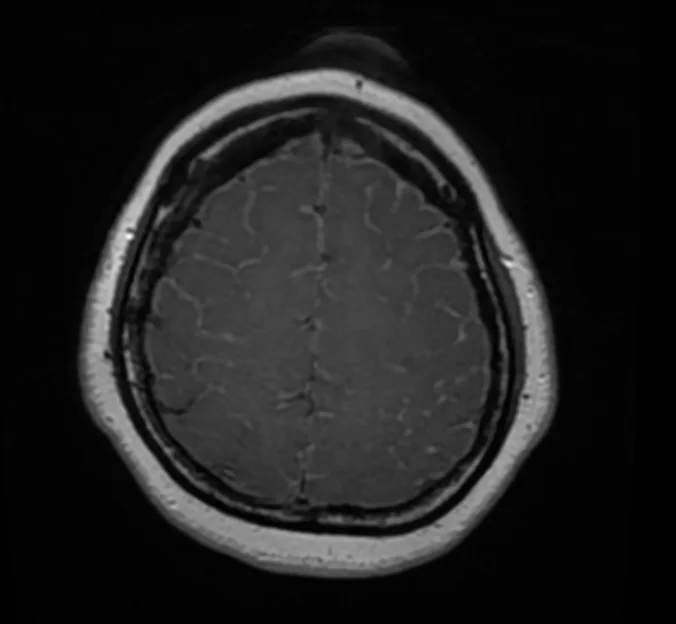
Epidermal growth factor receptor (EGFR) mutations are among the most common driver events in lung adenocarcinoma in China. Classical sensitising variants such as exon 19 deletions and the exon 21 L858R substitution already have well-established targeted treatment pathways. Rare subtypes, including exon 18 mutations, behave differently: drug response and the pattern of resistance are harder to predict, and they remain a difficult area of everyday lung cancer care.
A recently treated patient illustrates the challenge. Ms. Gao (a pseudonym), aged 40, was diagnosed with stage IV right-sided lung adenocarcinoma with brain metastases and an EGFR exon 18 mutation. After several lines of systemic therapy she developed widespread progression, followed by multiple intracranial metastases and tumour haemorrhage, and her condition became critical. An individualised plan agreed through multidisciplinary collaboration achieved prolonged disease control and preserved her ability to perform daily activities. Prof. Li Shuang, Vice Dean for Science and Education at Shanghai GOBROAD Cancer Hospital affiliated to China Pharmaceutical University and Director of Thoracic Oncology, discusses the treatment and long-term management of rare EGFR mutations with brain metastases.
The Patient's Treatment Trajectory
- First line: osimertinib plus bevacizumab, maintained for approximately three and a half years.
- After disease progression: AC regimen chemotherapy plus ivonescimab.
- Next: nab-paclitaxel plus furmonertinib, during which the brain metastases progressed at one point.
- On transfer to our hospital in May 2025: multiple metastases in both lungs and in the brain, with tumour haemorrhage on both sides of the brain. Her level of consciousness was poor and the lung lesions had progressed significantly.
- From June 2025: a three-drug combination of sacituzumab tirumotecan, dacomitinib and anlotinib — respectively an antibody-drug conjugate, a second-generation EGFR inhibitor and an anti-angiogenic agent, bringing three different mechanisms into play at once.
- During treatment: radiotherapy was given to intracranial lesions progressing quickly, both to relieve symptoms and to take account of the bleeding risk associated with anti-angiogenic therapy.
- Response and follow-up: the intracranial metastases achieved a partial response and then remained stable; the great majority of lung lesions shrank markedly or disappeared. As of November this year, progression-free survival had reached 17 months.
- Adverse events: myelosuppression occurred during treatment, with falling red and white cell counts, and improved after supportive care.
This is a single case. Every decision in her care was based on an overall assessment of the specific disease, functional status and tolerance, and does not mean that other patients can follow the same pathway.
What Is an EGFR Exon 18 Mutation?
EGFR is one of the most important driver genes in lung adenocarcinoma, and the proportion of Chinese lung adenocarcinoma patients carrying an EGFR mutation is high. Within the broader family of EGFR mutations, however, the individual variants differ considerably.
- Classical mutations: exon 19 deletions and the exon 21 L858R mutation account for about 90% of all EGFR mutations and are relatively sensitive to EGFR tyrosine kinase inhibitors.
- Rare (non-classical) mutations: the remaining 10% or so include exon 18 G719X, exon 21 L861Q, exon 20 S768I and exon 20 insertion mutations, among others.
Ms. Gao's exon 18 mutation is represented mainly by G719X, which accounts for about 3% of EGFR mutations and is one of the more frequently seen rare variants. G719X and S768I belong to the PACC group of mutations, while L861Q is often classified as classical-like. It is generally not grouped with classical sensitising mutations, which means the treatment strategy differs from that for classical disease.
Rare does not mean that no drug is available, but there are good reasons why it requires more thought. Drug sensitivity varies: first-generation EGFR inhibitors have limited activity against these variants; second-generation inhibitors have accumulated relatively more evidence in rare-mutation populations; third-generation inhibitors can also be used, but response rates and progression-free survival in this population are usually lower than in classical mutations. Treatment therefore needs to be decided individually, taking account of the exact mutation site, coexisting mutations and the presence of brain metastases.
Why Are Brain Metastases Hard to Treat?
Lung cancer is among the malignancies most likely to spread to the brain. Brain metastases are difficult for two reasons. The blood-brain barrier keeps many drugs from reaching effective concentrations inside the skull, and lesions in this location can cause headache, nausea and vomiting, limb weakness, seizures or cognitive decline.
Ms. Gao also experienced tumour haemorrhage, meaning bleeding from a metastatic lesion itself. For patients at high risk of intracranial bleeding, there are considerably more concerns during treatment. The usual approach to brain metastases has two arms:
- Local treatment: surgical resection, whole-brain radiotherapy and stereotactic radiotherapy to control intracranial disease and relieve symptoms. The choice depends on the number, size and location of lesions and on the patient's overall condition. The radiotherapy given here for rapidly progressing intracranial lesions belongs to this category.
- Systemic treatment: targeted therapy, chemotherapy, immunotherapy and antibody-drug conjugates to control the primary tumour and disease throughout the body.
How Do You Sequence Treatment After Multiple Lines?
When EGFR-targeted treatment has repeatedly lost effect and several lines of therapy have been used, the remaining options become fewer. The approach often shifts from trying yet another single drug to combining agents with different mechanisms.
The three-drug regimen used for Ms. Gao follows that logic. Dacomitinib, a second-generation EGFR inhibitor, has activity against some rare mutations and some penetration into intracranial lesions. Sacituzumab tirumotecan is a TROP2-directed antibody-drug conjugate that delivers cytotoxic medication directly to tumour cells. Anlotinib is an anti-angiogenic agent that works by inhibiting tumour blood vessel formation. Combining three mechanisms addresses the rare mutation, targeted-treatment resistance and rapid intracranial progression at the same time.
It is important to stress that more drugs are not automatically better. Combining mechanisms creates more treatment opportunities but also increases adverse effects such as myelosuppression. This patient's falling red and white cell counts during long-term treatment improved only through stronger supportive care and close monitoring. Finding the balance between efficacy and safety is a judgement every clinician has to revisit.
Closing Note
From advanced disease and brain metastases at diagnosis, through repeated progression, to stable disease today, Ms. Gao's experience suggests that even a rare EGFR mutation with brain metastases can often be held in reasonable control through multidisciplinary assessment, combined local and systemic treatment, careful management of adverse effects and long-term follow-up.
It is equally important to be realistic: every patient's disease, functional status and genetic background are different, and another person's regimen may not be suitable. Formal medical care and an individualised plan developed with a professional team remain the safer path.
Shanghai GOBROAD Cancer Hospital continues to put patient needs first, bringing in leading experts and advanced technology, and is committed to high-quality cancer care — more standardised, precise and systematic treatment for patients.
About the Featured Expert
Prof. Li Shuang is Vice Dean for Science and Education at Shanghai GOBROAD Cancer Hospital affiliated to China Pharmaceutical University and Director of its Department of Thoracic Oncology. Her work focuses on the diagnosis, individualised treatment and long-term management of thoracic malignancies, including lung cancer with rare driver mutations and brain metastases.
This is a de-identified single case and an educational article intended for general informational purposes only. It does not constitute medical advice, diagnosis or treatment, and the regimen described may not be appropriate for other patients. Please consult a qualified physician for any medical decision.