The 29th Annual Meeting of the Chinese Society of Clinical Oncology (CSCO) was held September 17-19, 2026 in Jinan, Shandong.
Under the theme Upholding Standards, Innovating Through Data and Intelligence, the congress hosted 85 academic sessions and brought together more than 20 academicians and over 30 overseas experts to discuss standardized oncology care, innovative drugs, clinical research, precision treatment, and intelligent healthcare.
As one of the most important annual academic platforms in Chinese clinical oncology, the CSCO Annual Meeting does more than present new research, new technologies, and new evidence. It also reflects how the discipline itself is changing: from standardized care toward precision decision-making, from single-modality treatment toward multidisciplinary management, and from a focus on efficacy and survival toward whole-course patient management.
A Congress That Upholds Standards and Looks Toward Innovation
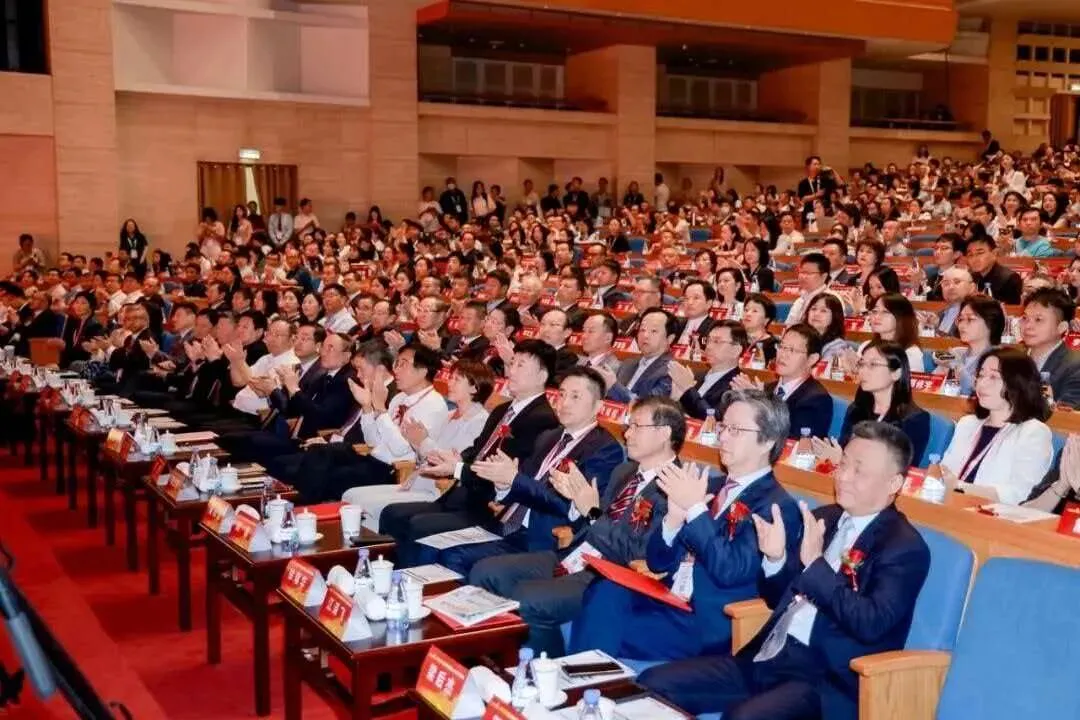
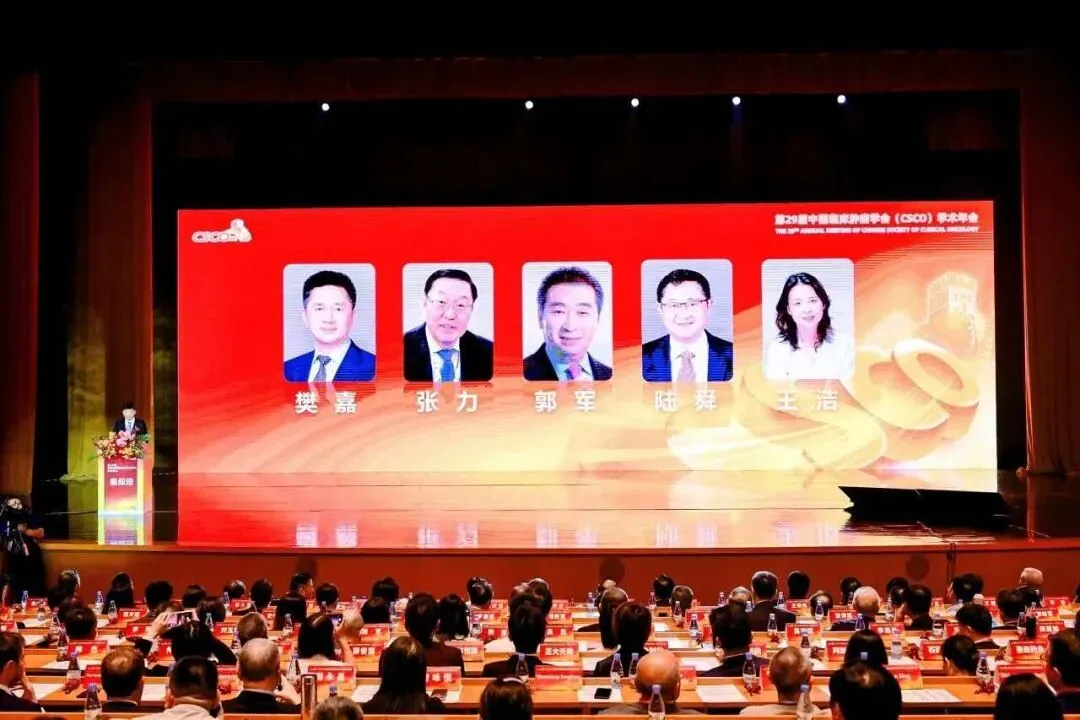
The plenary session opened on the morning of September 17. Prof. Guo Jun, Vice President and Secretary-General of CSCO, chaired the opening ceremony, and Academician Yu Jinming, President of CSCO, delivered the welcome address. The 2026 honors list was announced at the same time, covering the Annual Achievement Award, the Innovative Research Award, and the Outstanding Paper Award.
Speaking at the press conference held during the congress were Academician Yu Jinming, Prof. Ma Jun, Prof. Qin Shukui, Prof. Wu Yilong, Prof. Li Jin, Academician Xu Ruihua, Prof. Jiang Zefei, and Prof. Zhu Jun.
According to the official program, this year's meeting placed additional emphasis on original clinical research, interdisciplinary collaboration, international cooperation, evaluation of innovative drug development, and whole-course patient management.
Taken together, these directions point to a clear trend: standards remain the foundation of clinical practice, while the continuous flow of new evidence and new technologies keeps driving the renewal of treatment models.
Clinical Research and Innovative Therapy: From New Treatments to Precision Decisions
The Innovative Research Award and the Outstanding Paper Award presented at the congress offered a concentrated view of recent progress in Chinese clinical oncology research, spanning novel agents, combination therapy, cell therapy, long-term follow-up, and the optimization of treatment strategies.
These studies are no longer asking only whether a new treatment exists. They address more concrete clinical questions: which patients are more likely to benefit? How should treatments be combined and sequenced? And how does new evidence actually enter clinical practice?
In gastrointestinal tumors, for example, the PANKU-Esophagus01 study led by Prof. Shen Lin's team was selected for the Innovative Research Award, focusing on new treatment strategies for recurrent or metastatic esophageal squamous cell carcinoma, while the five-year follow-up results of KEYNOTE-590 in the Chinese population received the First Prize for Outstanding Paper. Together, the two results reflect clinical research moving beyond short-term efficacy toward long-term benefit and optimized treatment strategies.
In melanoma, the MIZAR-003 study, in which Prof. Si Lu took part, focused on patients with advanced disease after PD-1 antibody treatment failure and explored autologous tumor-infiltrating lymphocyte (TIL) therapy, further extending cell therapy into solid tumors.
In urologic tumors, research led by Prof. Sheng Xinan and Prof. Li Juan also entered this year's list of award-winning achievements, exploring precision and innovative treatment strategies for advanced renal cancer and urothelial carcinoma.
These selected studies point to one shared trend: oncology treatment is moving from a relatively uniform pathway toward individualized decisions that are dynamically adjusted according to disease characteristics, molecular information, and prior treatment.
New treatments continue to expand the boundaries of what is possible, while high-quality clinical research is helping these innovations reach patients in a more standardized way.
From Research Results to Whole-Course Patient Management
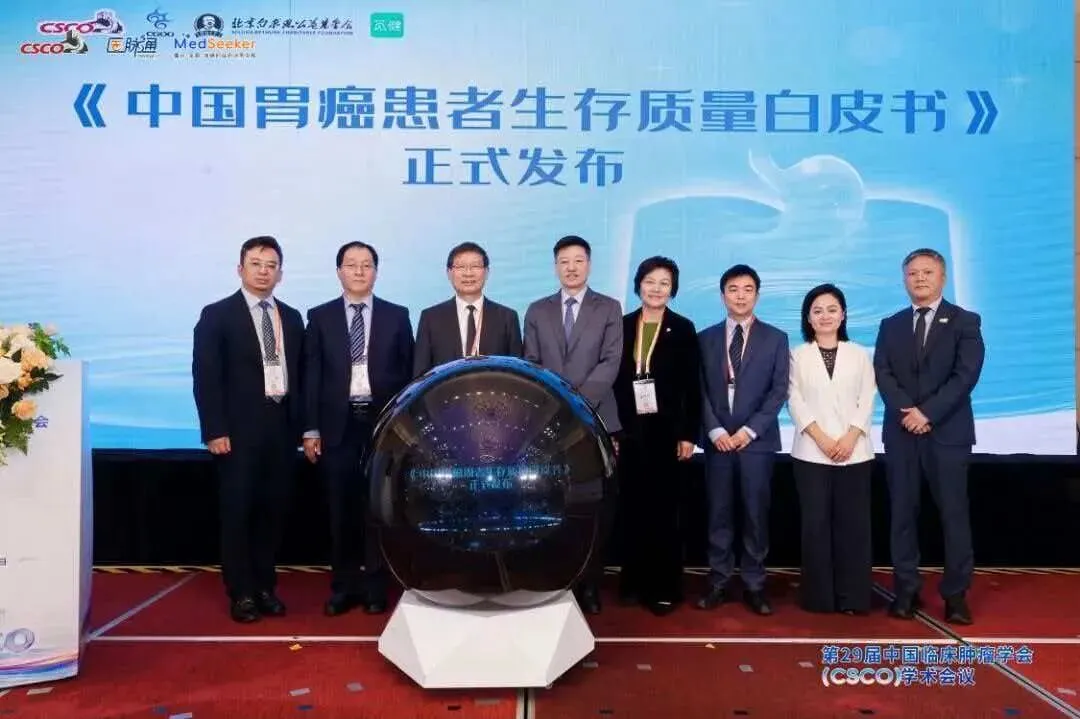
During the congress, the first China Gastric Cancer Patient Quality of Life White Paper was officially released. The white paper was initiated by the Beijing Bethune Charitable Foundation, guided by the CSCO Gastric Cancer Expert Committee and the Chinese Gastrointestinal Oncology Group (CGOG), and led by Prof. Shen Lin of Peking University Cancer Hospital, with Academician Xu Ruihua, Prof. Li Jin, Prof. Zhang Yanqiao, Prof. Liu Baorui, Prof. Bi Feng, and Prof. Zhan Siyan serving as advisory experts.
Based on real-world data from one thousand gastric cancer patients, the white paper systematically presents the actual needs patients face from disease detection through diagnosis and treatment to long-term living, covering early diagnosis, precision testing, whole-course care, and patient education.
It also responds to a direction in which oncology care keeps extending: while attending to efficacy and survival, the field pays greater attention to patients' real experience, quality of life, and long-term management needs.
Exchanging with Peers, Following Clinical Progress
During the congress, a number of GOBROAD experts, together with specialists who have long contributed to GOBROAD's academic development and clinical collaboration, appeared across different academic sessions, taking part in this annual gathering of oncology from session chairing through the exchange of clinical research results.
Prof. Guo Jun chaired the opening ceremony and the press conference. Prof. Li Jin attended the press conference and took part in a number of focused academic exchanges. Prof. Han Baohui and other lung cancer specialists chaired sessions and joined discussions on lung cancer care and related research progress. Several gastrointestinal oncology studies in which Prof. Shen Lin took part received the congress's annual awards, and she also led the guidance of the China Gastric Cancer Patient Quality of Life White Paper. Prof. Ye Dingwei chaired a session on urologic tumors and exchanged views with peers on clinical practice and research progress. Prof. Zhou Jun and Prof. Qin Haifeng also took part in academic presentations and exchanges at this year's congress, sharing progress in clinical research and practice in their fields.
For GOBROAD Medical Group, which has long focused on hematologic diseases and solid tumors, CSCO is both an important platform for following progress in clinical oncology research and for learning standardized care experience, and a key window for physicians to exchange clinical questions with peers, join research collaboration, and keep updating their clinical understanding.
This is consistent with GOBROAD's continuing exploration of the research hospital model: starting from patient needs and clinical questions, seeking answers in research, and then bringing new evidence, concepts, and experience back to the clinic. Going forward, GOBROAD's physician teams will continue to take part in professional academic exchange and clinical research, helping new research results better serve clinical decisions and bringing patients more treatment options. Research begins with clinical questions and ultimately serves patient benefit.
This article is a press summary based on the official congress program and the publicly released CSCO 2026 honors information. It is intended for general informational purposes only and does not constitute medical advice, diagnosis, or treatment. Please consult a qualified physician for any medical decision.